Solar panels on a mixed-use building: which VAT rate applies?
Published 14 October 2026 · SEO Dons Editorial
Editorial standards: figures are cross-checked against gov.uk capital-allowances guidance and Ofgem Smart Export Guarantee rates, and updated as rules change. We are independent, so no funder relationship influences these comparisons. General information, not financial or tax advice, confirm your position with your accountant.
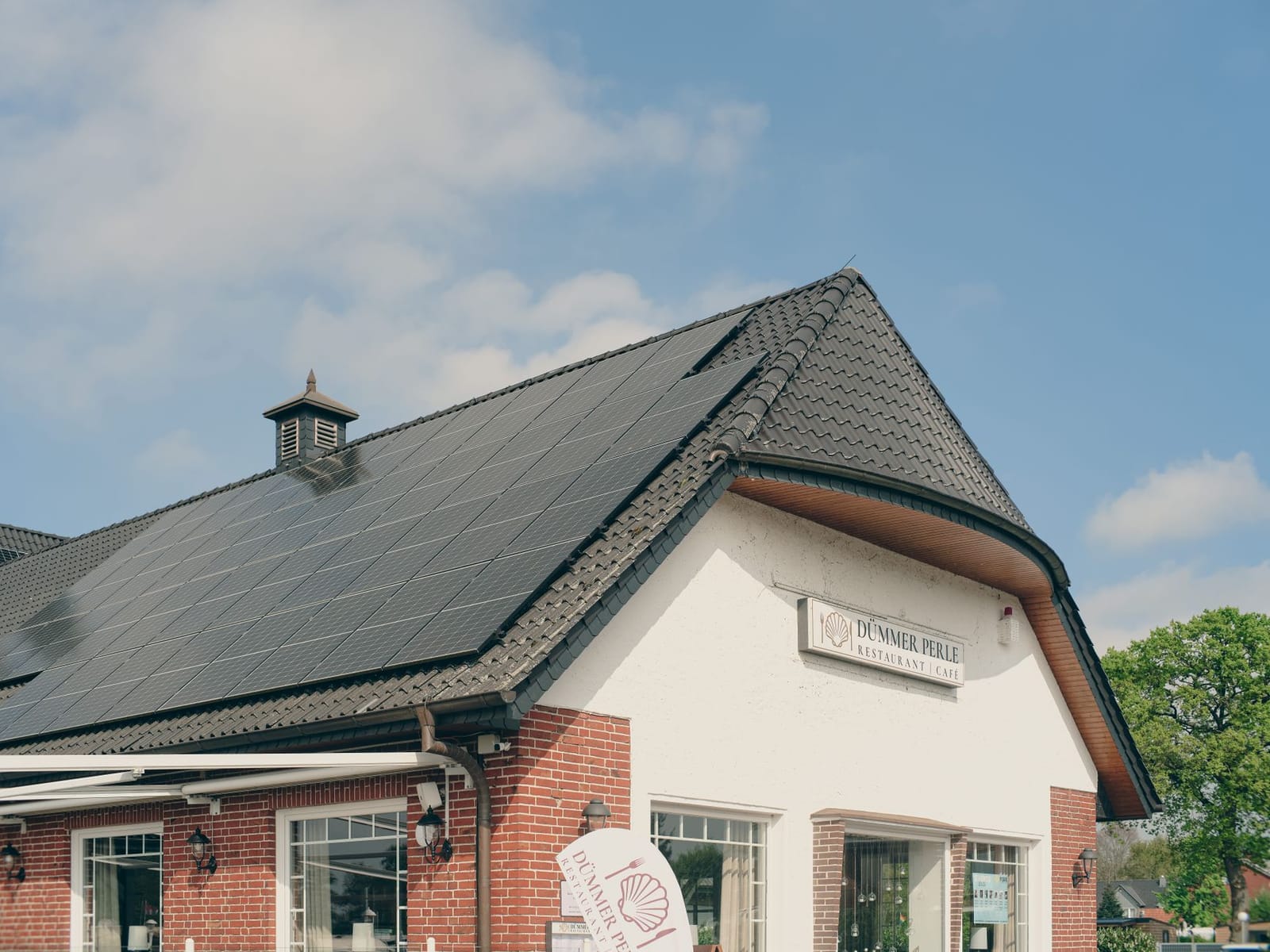
Solar panels on a mixed-use building raise a VAT question that a purely commercial roof does not. The zero rate for energy-saving materials follows the building, and a building with a shop below and a flat above, or a farmhouse beside a range of farm buildings, is partly residential and partly not. This guide answers the question of which VAT rate applies for the business cases below, using the VAT Act, HMRC's VAT Notice 708/6 on energy-saving materials and other HMRC notices.
The rule that decides the rate
Installing solar panels is zero-rated when the work is done in residential accommodation or, from 1 February 2024, in a building intended for use solely for a relevant charitable purpose. For residential accommodation in England, Wales or Scotland the zero rate covers supplies made before 1 April 2027, and HMRC's notice says these installations revert to the reduced rate of 5% from 1 April 2027. Everything else, including shops, offices, workshops and farm buildings, is standard-rated at 20%, and so are hotels, inns and similar establishments. The commercial side, including how a business reclaims the 20%, is covered in the main guide to VAT on solar panels for business.
The words that matter for a mixed-use building are in the statute. Residential accommodation means a building, or part of a building, that consists of a dwelling or a number of dwellings, or a building or part of a building used for a relevant residential purpose. Because the definition includes part of a building, the flat above a shop is residential accommodation even though the shop below it is not.
How a part-residential building is split
Notice 708/6 does not say how to split a single installation between a residential part and a commercial part. The closest HMRC statement is in Notice 708, its buildings and construction notice, which Notice 708/6 points to for the liability of other building work. Notice 708 says that where only part of a building consists of qualifying accommodation, such as a building of shops with flats above, a supply relating partly to the qualifying parts and partly to the rest can be zero-rated or reduced-rated only to the extent that it relates to the qualifying parts, and a fair and reasonable apportionment should be made. A supply that relates only to the qualifying parts takes the relief in full, and one that relates only to the other parts cannot. Notice 708 lists roofs among the work affecting both parts that must be apportioned.
That rule is written for the building work Notice 708 covers rather than for energy-saving materials, so treat it as HMRC's general approach, not a rule made for solar. It still points one way: work for the flat can take the zero rate, work for the shop takes 20%, and an array on a shared roof is split on a basis the installer can justify. Neither notice prescribes the basis, so agree it with the installer before work starts and keep the working with the invoice.
The common mixed-use cases
A shop or office with a flat above
This is HMRC's own example of a part-qualifying building. The flat is a dwelling and the shop or office is not, so work that serves both is apportioned, while work that relates only to one part follows that part. A business owner who trades from the shop and is VAT-registered can reclaim the VAT on the shop's share under the normal rules. One who also lets property should check how its lettings affect the reclaim, because VAT cannot be reclaimed on goods and services used to make VAT-exempt supplies.
A farm with a farmhouse
A farmhouse is a dwelling, so panels installed on the farmhouse can be zero-rated. Barns, dairies, grain stores and workshops are not residential accommodation, so panels on those buildings are standard-rated, and a VAT-registered farm reclaims the VAT under the normal rules. If one array on a farm building is meant to supply both the farm and the farmhouse, ask the installer to explain in writing how it has decided the rate. More on farm projects is in the guide to solar for farms and agriculture.
A business run from home
A house does not stop being a dwelling because someone works in it. HMRC's construction notice says that dwellings containing a home office are not live-work units and need no apportionment, so panels on the house of a sole trader or a company director are installed in a dwelling, and a VAT-registered sole trader has no VAT to reclaim on a zero-rated installation. A live-work unit is different: it combines a dwelling and working space as a requirement or condition of planning permission, and for building work Notice 708 says a unit with the work area shown as a discrete area of floor space, in an office or workshop, must be apportioned. A separate workshop or commercial unit at the same address is not residential accommodation in its own right. Sole traders weighing up how to pay can read about solar finance for sole traders.
A bed and breakfast or guest house
Notice 708/6 standard-rates installations in hotels, inns and similar establishments, without defining a similar establishment. HMRC's hotels notice describes similar establishments as premises with furnished sleeping accommodation that are used by, or held out as suitable for use by, visitors or travellers, and lists guesthouses, bed and breakfast establishments, hostels and serviced flats (other than those for permanent residential use). So expect the standard rate on a bed and breakfast's guest accommodation. If the owner lives in a self-contained part of the building, that part may be a dwelling, which makes the property a part-residential building to apportion, so ask the installer how it has treated the owner's own accommodation.
A self-catering holiday let
Self-catering holiday accommodation is on HMRC's list of residential accommodation for energy-saving materials, so installing panels on a holiday cottage or lodge is zero-rated until 31 March 2027, even though the owner is running a business. The line falls between self-catering and serviced accommodation: HMRC's hotels notice says accommodation in hotels, inns, boarding houses and similar establishments is not holiday accommodation for VAT purposes. A farm with a holiday cottage and a barn therefore has three rates to plan around: 0% on the cottage now, 5% on the cottage from 1 April 2027 and 20% on the barn throughout. Guest accommodation businesses can find more in the guide for retail and hospitality.
Care homes and student accommodation
Both are on the residential accommodation list: homes providing care for the elderly, disabled people, or people who suffer or have suffered from drug or alcohol dependency or mental disorder, and residential accommodation for students or pupils. Either can share a building with other uses, such as offices, kitchens, teaching rooms or communal space. For building work, HMRC's construction notice draws a distinction: for student accommodation the relief extends only to the residential accommodation, while for a home or other institution it is not restricted to the residential accommodation and can extend to other areas such as administration offices. Notice 708/6 does not say whether that distinction carries across to energy-saving materials, so ask the installer how it has treated any non-residential areas.
A charity building partly used for business
The charity relief applies only to a building intended for use solely for a relevant charitable purpose: use by a charity otherwise than in the course or furtherance of a business, or as a village hall or similarly in providing social or recreational facilities for a local community. The word "solely" is strict. HMRC's construction notice, which Notice 708/6 points to for more on these buildings, warns that activities which make no profit, or whose profit only furthers the charity's aims, can still be business activities. It lists places of worship and school buildings where no fee is charged among buildings typically not used for business, and school buildings where a fee is charged, and membership organisations that charge a fee, among those typically used for business. For village halls it treats a building as used solely as a village hall or similar where at least 95 per cent of it is used for social or recreational activities. A charity building with a café, a shop or fee-paying lettings may therefore fail the test, and the installation is then standard-rated. No certificate is needed for this relief, but the installer should take reasonable steps, such as asking for a letter confirming the intended use.
An illustrative split
Illustrative figures only, with every input shown. A two-storey building has a shop of 120 square metres on the ground floor and a self-contained flat of 80 square metres above it. The owner trades from the shop and is VAT-registered and fully taxable. An installer quotes £10,000 excluding VAT for one array on the shared roof, and the owner and installer agree to apportion it by floor area; HMRC asks for a fair and reasonable apportionment without prescribing a method.
- Total floor area: 120 + 80 = 200 square metres.
- Residential share: 80 ÷ 200 = 40%, so £10,000 × 40% = £4,000, at 0% = £0 VAT.
- Commercial share: 120 ÷ 200 = 60%, so £10,000 × 60% = £6,000, at 20% = £1,200 VAT.
- Invoice total: £10,000 + £1,200 = £11,200.
Charged at 20% on the whole roof, the VAT would have been £2,000, so the split takes £800 off the bill. Because the owner uses the shop for its taxable business, it can reclaim the £1,200 on the commercial share under the normal rules, leaving the flat's share with no VAT on it at all. HMRC's notice says these installations revert to the reduced rate of 5% from 1 April 2027, so the same job supplied on or after that date would carry £4,000 × 5% = £200 on the residential share, plus the same £1,200, so £1,400 in all.
What to ask the installer
- Which parts of the building are residential accommodation, or used solely for a relevant charitable purpose, and which are not?
- Does the work relate to one part only or to both, and if both, what basis is used to split it?
- Will the invoice show the zero-rated and standard-rated amounts separately, with the installer's VAT number and the VAT shown?
- Is a battery included, and is it treated as part of the same supply as the panels?
- For a charity, what confirmation of the intended use does the installer need?
- If the work runs close to 1 April 2027, which rate applies to each part of the job?
Once the split is agreed, model the net cost in the finance calculator, or request a quote that sets out the VAT for each part.
Honest limits
This guide is general information, not tax advice. HMRC's energy-saving notice says little about mixed-use buildings, and the apportionment approach here borrows from its construction notice, so the right answer for a particular building can depend on its layout, its use and how the contract is written. Check your own position with an accountant or HMRC before you rely on it.
Questions business owners ask
Do solar panels on a flat above a shop get 0% VAT?
The flat's share can. The law treats part of a building that consists of a dwelling as residential accommodation, so work relating to the flat can be zero-rated until 31 March 2027, while work relating to the shop is standard-rated at 20%. Where one array serves both, HMRC's construction notice calls for a fair and reasonable apportionment and names roofs as work to apportion.
Is a holiday let residential for solar panel VAT?
A self-catering holiday let is. Self-catering holiday accommodation is on HMRC's list of residential accommodation in Notice 708/6, so installing panels there is zero-rated until 31 March 2027, then 5%. Hotels, inns and similar establishments are standard-rated.
Does a bed and breakfast get 0% VAT on solar panels?
Generally not. Notice 708/6 standard-rates installations in hotels, inns and similar establishments, and HMRC's hotels notice lists guesthouses and bed and breakfast establishments as similar establishments. If the owner lives in a self-contained part of the building, that part may be a dwelling and the job may need to be apportioned.
Does a charity need a certificate for 0% VAT on solar?
No. Notice 708/6 says no certificate is needed for the energy-saving materials relief, but the installer should take reasonable steps to confirm the building will be used solely for a relevant charitable purpose, such as asking for a letter confirming the intended use.
How is a mixed-use roof split for VAT?
On a fair and reasonable basis. HMRC's construction notice says work affecting both qualifying and non-qualifying parts of a building, including roofs, must be apportioned, and neither it nor Notice 708/6 prescribes a method. This guide's illustration uses floor area; agree the basis with the installer and keep the working with the invoice.
Related guides
Ready to move from theory to real numbers?
Free to use, no obligation
- 1. Tell us about the building, its electricity spend and how you would like to fund it.
- 2. We reply by email with the funding routes worth comparing for your building.
- 3. You decide. There is no obligation, and the routes compared on this site help you check any quote.
- Every route compared
- No upfront options
- No obligation
- Free to use