Business solar finance in Manchester
Work out how to fund a rooftop system for your business across Manchester and the wider Greater Manchester area, including Salford, Trafford, Stockport. Every route explained, with the local grants and tax that change the maths.
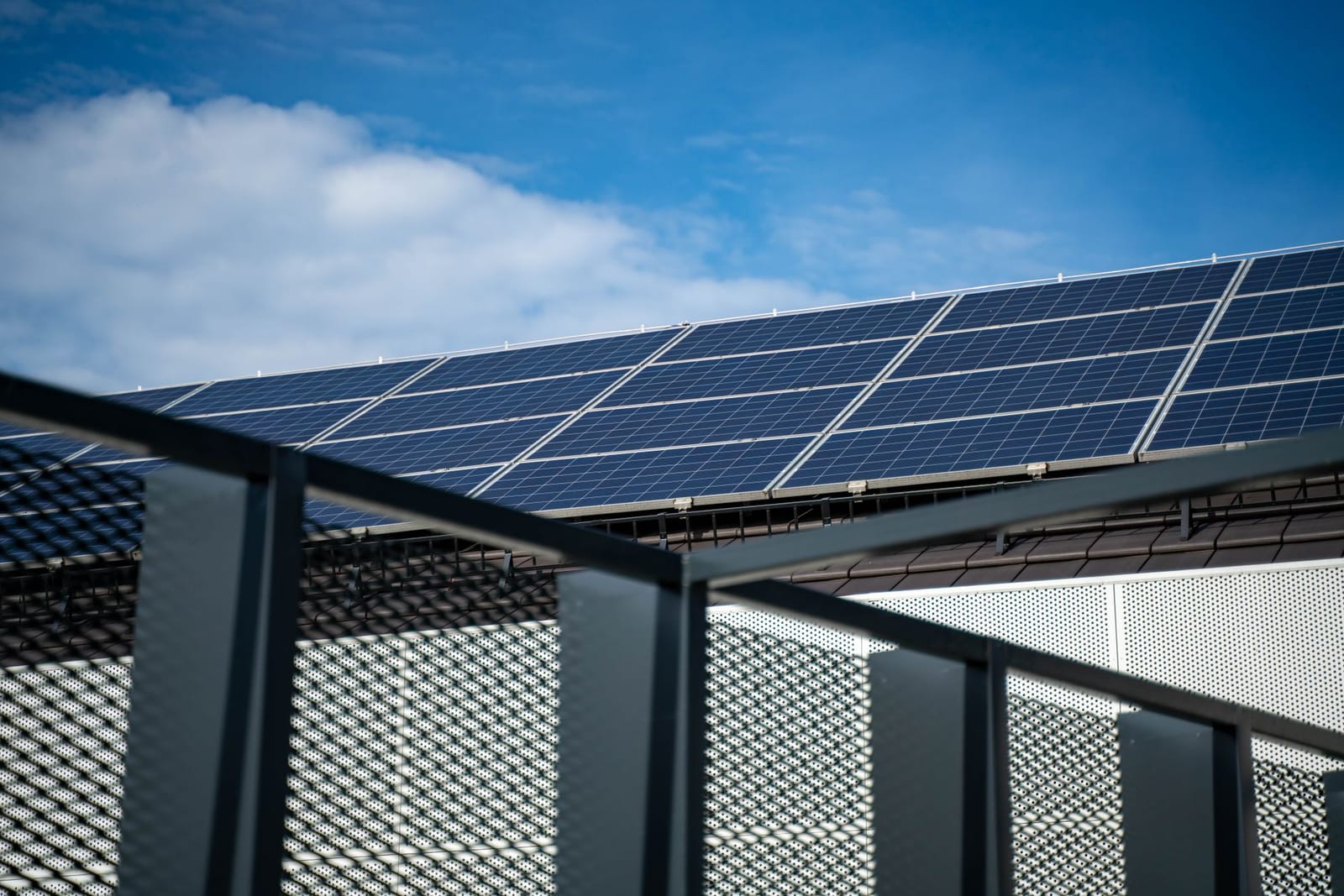
If you run a business in Manchester and have got as far as reading this, you have probably already accepted that solar cuts your electricity bill. The question you are stuck on is the money one: can the business afford it, should you buy it or let a funder own it, and will the monthly cost really come in under the monthly saving. This page is here to help you answer that before you talk to a single salesperson. For a firm across Trafford Park, Wythenshawe Industrial Estate or the Sharston Industrial Area, two identical rooftop arrays can leave two very different cash positions depending purely on how each one was funded, so the funding decision is the one worth thinking hardest about.
The decision that moves the numbers
Energy-heavy operations in the Trafford Park logistics belt can carry very large electricity bills, so the funding structure matters; the scenario below uses an illustrative £48,000 a year. Against a bill of that size the way you fund solar changes three things at once: how much cash leaves your account on day one, your monthly position from the first month, and who carries the tax relief and the performance risk. Buying outright keeps every pound of saving and the full first-year allowance, but ties up working capital you might rather hold for stock or hiring. Hire purchase and asset finance spread the cost while you still own the asset and still claim the relief. An operating lease hands ownership and maintenance to a funder for a fixed monthly rental. A Power Purchase Agreement or a no-upfront-cost route puts a system in for nothing down and you buy the power it makes, typically well below a 2026 grid price of roughly 26 to 32p a unit.
None of these is universally best, and anyone who tells you otherwise is selling. The right answer turns on your cash reserves, your tax profile, how long you will occupy the unit, and how much of the generation you use on site, which for a well-matched daytime load is usually 50 to 80%. Model each route against your own bill on the finance calculator, then read every option side by side on the funding routes compared page so the monthly saving sits next to the monthly payment.
The tax point most Manchester owners get wrong
The single most common mistake is planning around “100% full expensing”. Solar PV is special-rate plant under HMRC’s rules, and full expensing is for main-rate assets, so it does not apply to solar. What does apply, and covers most Manchester installs, is the Annual Investment Allowance: 100% first-year relief on qualifying plant up to £1m a year, worth about 25p in the pound at 25% corporation tax. Above that ceiling a company can use the 50% special-rate first-year allowance with the balance written down at 6% a year. Get that right and your first-year relief is real; plan around full expensing and you will overstate it. Confirm the position with your accountant before you rely on it.
On rates, rooftop solar used for self-consumption in England is 100% exempt from business rates from April 2022 to March 2035, so it will not raise your rateable value in that window. That strengthens the case for owning the asset through capital purchase, hire purchase or asset finance rather than a route where you never take title. Locally, Manchester City Council targets net zero by 2038, the most ambitious of any major UK city, and the GMCA carries business decarbonisation funding worth checking before you fix your route, since a grant can shift which option wins.
A Manchester scenario, modelled
Picture a distribution unit in Trafford Park with a bill near the £48,000 mark and a large flat roof. Bought outright, the array might show a simple payback of four to six years once the year-one allowance is counted, then run as near-free generation for two decades. Funded through hire purchase, the same system could be cash-flow positive early, the repayment offset by the drop in grid spend while reserves stay working elsewhere. On a Power Purchase Agreement the unit pays nothing upfront and buys cheaper units from its own roof, giving up the ownership and the relief in exchange. Three routes, three balance sheets, one identical set of panels. Firms in Salford, Trafford and Stockport face the same choice.
Once the numbers make sense for your site, the next step is real figures. When you are ready to move from modelling to costed offers, request a costed quote. To pressure-test the return, work through the payback and ROI before you commit.
Postcodes covered in Manchester
- M1
- M2
- M3
- M4
- M5
- M6
- M7
- M8
- M9
- M11
- M12
- M13
- M14
- M15
- M16
- M17
- M18
- M19
- M20
- M21
- M22
- M23
Other areas we cover
Modelled your Manchester numbers? Request a costed quote
Free to use, no obligation
- 1. Tell us about the building, its electricity spend and how you would like to fund it.
- 2. We reply by email with the funding routes worth comparing for your building.
- 3. You decide. There is no obligation, and the routes compared on this site help you check any quote.
- Every route compared
- No upfront options
- No obligation
- Free to use