No Upfront Cost Solar for Business: How It Really Works
Updated 1 July 2026 · SEO Dons Editorial
Editorial standards: figures are cross-checked against gov.uk capital-allowances guidance and Ofgem Smart Export Guarantee rates, and updated as rules change. We are independent, so no funder relationship influences these comparisons. General information, not financial or tax advice, confirm your position with your accountant.
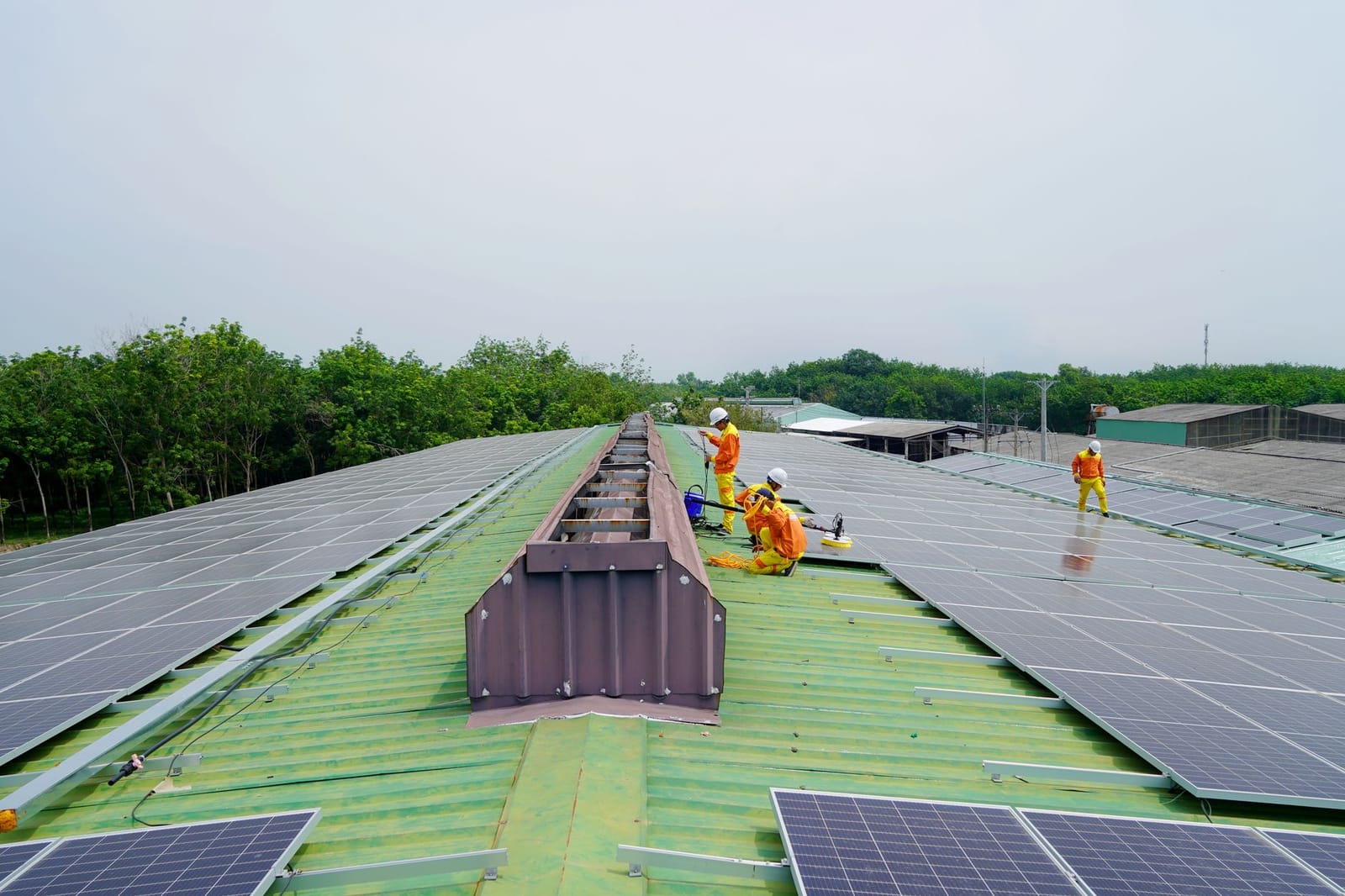
“No upfront cost.” “Fully funded.” “100% finance.” “Zero deposit.” “Solar that pays for itself.” You will see all of these advertised, and they all promise the same appealing thing: solar cutting your energy bills without your business spending a penny on day one. The promise is real, and for a lot of businesses it is the right way in. The agreements behind it, including rooftop leases, are set out in zero upfront solar for business.
But here is the thing every owner should understand before signing: none of those phrases is a distinct product. Each one is a marketing label for a structure you can already name, and the label tells you nothing useful until you find out what sits underneath it. This guide pulls the labels apart, shows you the two things they actually resolve to, and gives you the questions that turn “fully funded” from a black box into a decision you can make on evidence.
This is general information, not financial or tax advice. Confirm your own position with your accountant before you commit.
The labels all resolve to two structures
Strip away the marketing and every no-upfront-cost solar offer for a business is one of two things:
- A Power Purchase Agreement (PPA). A funder owns the system on your roof and you buy the electricity it produces at an agreed rate below your grid price. You spend nothing and never own the asset.
- 100% finance on an owned system. You own the system from day one but borrow the full cost, through a green loan, hire purchase or asset finance, and repay it from the energy saving. You own the asset and claim the tax relief.
That is it. “Fully funded”, “no deposit” and “100% financed” are all just one of these two dressed in different words. The shared promise, in both cases, is that the saving covers the payment so the system pays for itself and the project is cash-flow positive from early on. The crucial difference, hidden by the label, is who ends up owning the asset and who gets the tax relief and export income.
Because those two structures land completely differently on your numbers, the right question is never “is this a good no-upfront deal”, it is “what is the structure underneath, and which one is better for my business”.
Structure one: the PPA (funder-owned)
Under a PPA the funder owns, insures and maintains the system, and you just buy cheaper power. Some providers sell the same arrangement for a fixed service fee instead; see solar as a service. Your bill falls from day one, you spend nothing, and you carry no maintenance risk. In exchange, the funder keeps the capital allowances and the Smart Export Guarantee income, you commit to a long contract of typically 10 to 25 years, and you accept the lowest lifetime return of any route because the funder’s margin comes out of your saving.
A PPA is the right kind of “no upfront cost” when you genuinely will not commit capital, ownership does not matter to you, and you are not in a strong tax position, so the allowances an owner would claim are worth less to you than to the funder anyway. We cover it in full in our solar PPA explained for business guide and on the Power Purchase Agreement page.
Structure two: 100% finance (you own it)
The alternative no-upfront route keeps you as the owner. Where the zero-capital offer is a lease instead, this comparison of leasing against buying. A green loan, hire purchase or asset-finance deal funds the entire cost, you own the system from day one, and you repay the finance from the energy it saves. There is no deposit on a 100% loan, and hire purchase may take a small one, but in both cases the aim is the same: the annual saving plus any export income beats the annual finance cost, so the project self-funds.
The advantage over a PPA is decisive for a profitable company. Because you own the asset, you claim the Annual Investment Allowance, worth roughly 25p of tax relief per £1 spent in year one, and you keep the export income. On a £48,000 system that year-one allowance is worth in the region of £12,000, a benefit a PPA hands to the funder instead. You also own the system outright once the finance clears, so the full saving flows to your bottom line for the rest of its life. The trade-offs are that it sits on your balance sheet, you take the maintenance responsibility, and you carry the performance risk. See the hire purchase, asset finance and business or green loan pages for how each is structured.
A worked comparison
Take a business looking at a 48 kWp rooftop system. Under both no-upfront structures it spends nothing on day one, but the numbers diverge over time.
- On a PPA, the funder owns the system, the business buys the power at a rate below its 26 to 32p grid price, and its bill falls immediately. The funder keeps the roughly £12,000 of year-one tax relief and the export income. The saving is real but capped, because the funder’s margin is baked into the unit rate.
- On a 100% green loan, the business owns the system, claims the roughly £12,000 first-year allowance, keeps the export income at 3 to 15p per exported unit, and repays the loan from the saving. In a representative case, a 48 kWp system generating around 46,000 kWh a year produces a gross annual benefit near £12,400, against loan repayments of roughly £9,800 a year, leaving the project a little over £2,500 a year cash-positive before counting the tax relief. Once the loan clears, the full saving flows to the bottom line for the remaining fifteen-plus years.
These are representative, indicative 2026 figures, not a named client, but they show the pattern: two “no upfront cost” deals, wildly different lifetime outcomes, decided entirely by the structure underneath. You can run your own version on the finance calculator.
The questions that open the black box
When a provider offers you “fully funded” or “no upfront cost” solar, ask these five questions and the label stops being a mystery:
- Who owns the asset? You, or the funder? This one answer tells you which structure you are in.
- Who gets the tax relief and export income? If you do not own it, you do not get the capital allowances or the SEG payments.
- What does it really cost over the full term? Not the monthly figure, the total. A low monthly payment can hide a high lifetime cost.
- How do I exit? What happens if I sell the building or want out early, and what does that cost?
- What is the balance-sheet treatment? On or off, and confirmed with my accountant rather than assumed.
Any reputable provider will answer all five plainly. If you would rather borrow and own the system, the cash-flow test on solar loans for small business shows what repayments do to the numbers, and a 0% loan for solar panels explains why interest-free offers are rarely for businesses. If the answers are vague, that is your signal to slow down, because the vagueness is usually where the funder’s margin hides.
Is “no upfront cost” a good idea for your business?
Often, yes. Removing the capital barrier is genuinely valuable: it lets a business get solar cutting its bills without tying up cash it needs for stock, hiring or growth, and a well-structured deal is cash-flow positive from early on. The barrier that used to defer sensible projects, the day-one cost, disappears.
The honest caveat is that zero upfront usually means giving up something, whether that is ownership, tax relief or lifetime return. There is no free lunch: the funder’s margin has to come from somewhere, and on a PPA it comes from savings you would otherwise keep. That does not make no-upfront wrong, it makes it a trade you should make with your eyes open. For many businesses, 100% ownership finance is the sweet spot, removing the capital barrier while keeping the tax relief and the eventual free power.
How to decide
Work it in three steps. First, decide whether owning the asset matters to you and whether you can use the tax relief, because if both are yes, an owned 100% finance route almost always beats a PPA. Second, model both against your actual electricity bill so you can see the monthly payment next to the monthly saving and the lifetime cost of each. Third, ask the five questions above of any specific offer so you know exactly what you are signing.
The finance options compared page lines every route up on the same measures, the cost page shows typical system prices, and the finance calculator lets you test a PPA against a 100% loan on your own numbers.
When you are ready to see real no-upfront figures for your building, you can request costed quotes and compare PPA and 100% finance options side by side. You can also request a costed quote directly.
Related guides
Ready to move from theory to real numbers?
Free to use, no obligation
- 1. Tell us about the building, its electricity spend and how you would like to fund it.
- 2. We reply by email with the funding routes worth comparing for your building.
- 3. You decide. There is no obligation, and the routes compared on this site help you check any quote.
- Every route compared
- No upfront options
- No obligation
- Free to use