Business Solar Finance, Explained Route by Route
Every way to fund commercial solar, explained in plain English and modelled against your own electricity bill, with the grants and tax relief that change the sums. Understand your options before you talk to anyone.
- Every route explained
- No upfront-cost options
- Straight answers on tax
- No obligation
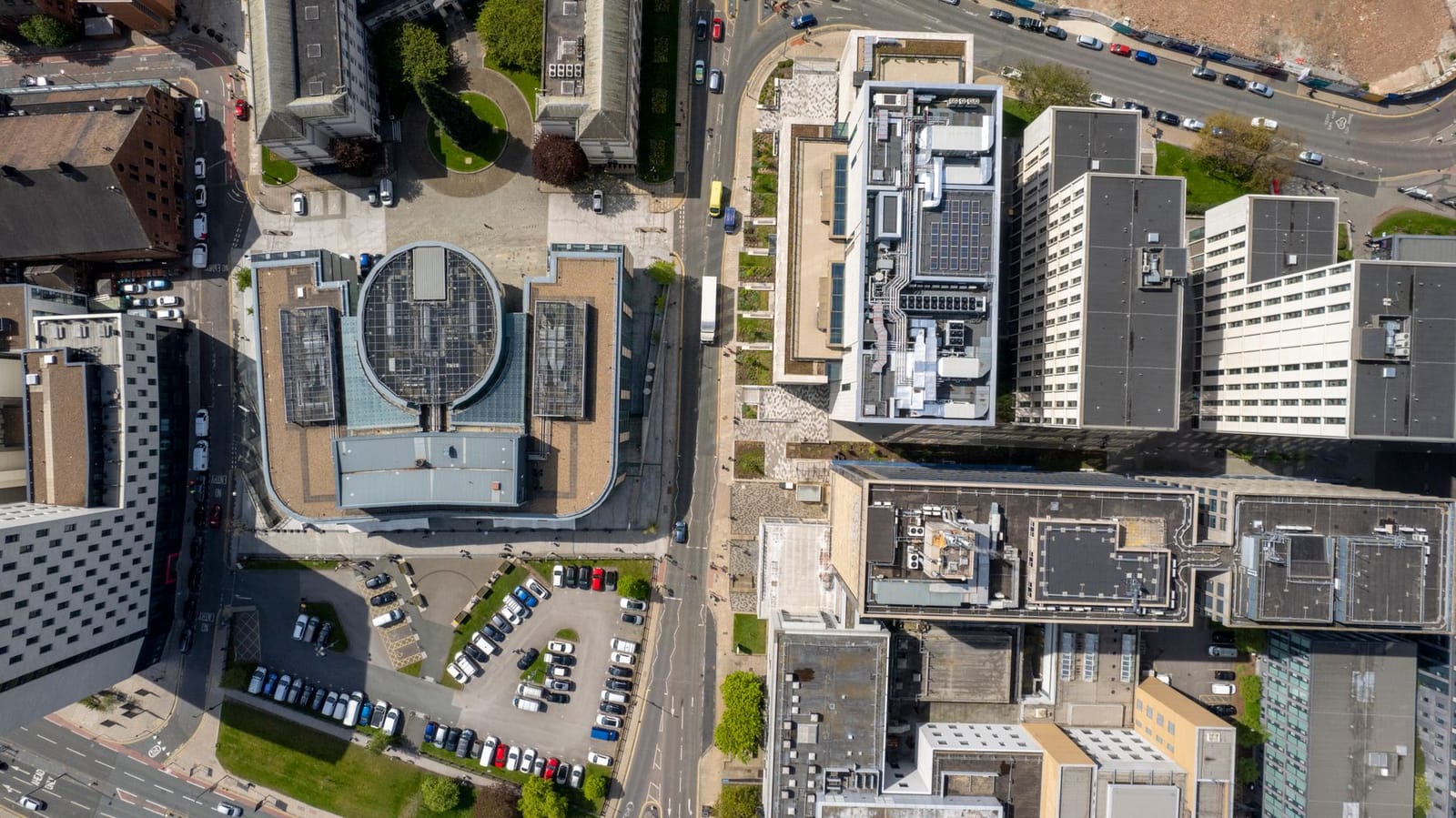
How you fund solar matters as much as the price
For most UK businesses the hard part of going solar is no longer whether it works, it is working out how to pay for it. The same rooftop system can be bought outright, spread over monthly instalments on hire purchase or asset finance, funded with a business or green loan, rented on a lease, or installed at zero capital cost under a Power Purchase Agreement, and each route lands very differently on your cashflow, your balance sheet, your tax bill and your lifetime return. Buying outright keeps every pound of saving and the full first-year tax relief but ties up working capital. A PPA needs no capital at all but you never own the asset or the allowances. Finance sits in between, letting you own the system and claim the relief while paying from the energy it saves. There is no single right answer, only the right answer for your cash position, your tax profile and how long you will hold the building. This site explains every route in plain English, lets you model each one against your own electricity bill, and sets out the grants and capital allowances that quietly change the sums, so you can make the funding decision on evidence and take clear numbers to your accountant before you commit.
- Every funding route explained on your terms, not one option pushed at you
- Model each route against your own bill and see the monthly saving next to the monthly payment
- Straight answers on tax: solar is special-rate, the AIA covers most installs, no overclaiming full expensing
- The grants and capital allowances that actually change the maths, mapped for private businesses
Funding routes
The ways a business can fund solar
Each route changes your upfront cost, who owns the system, your tax position and your lifetime return. The solar panel tax relief guide sets out what a business can claim on each route. Pick one to see how it works, or compare them side by side.
Which funding route fits your business?
| Buy outright Cash or green loan | Hire purchase Own it at the end | Operating lease Rent, lessor owns it | PPA Zero capital cost | |
|---|---|---|---|---|
| Upfront cost | Full cost or £0 via loan | Deposit only | £0 to low | £0 |
| You own the system | At the end | |||
| You claim the tax relief | ||||
| Highest lifetime return | Strong | Lower | Lowest | |
| Keeps capital free | Loan only | |||
| Off balance sheet | Sometimes | Usually | ||
| No maintenance responsibility | Varies |
Why the funding structure changes everything
The hard part is not the panels, it is how you pay for them
For most UK businesses the case for solar is already made; the sticking point is the money. The same rooftop system can be bought outright, spread over monthly instalments on hire purchase or asset finance, funded with a business or green loan, rented on a lease, or installed at no capital cost under a Power Purchase Agreement. Each route lands differently on your cashflow, your balance sheet, your corporation-tax bill and your lifetime return. Buying outright returns the most because you keep every pound of saving, the export income and the full tax relief, but it uses working capital you might need elsewhere. A PPA removes the capital barrier entirely but hands the asset and the allowances to a funder, so the lifetime return is the lowest. Finance sits in between, letting you own the system and claim the relief while paying from the energy it saves. This site explains each route on your terms and lets you model it against your own numbers, rather than pushing one option.
What the tax relief really gives your business
Solar PV is special-rate plant for capital allowances, so it does not qualify for the headline 100% full expensing, which is for main-rate assets only. Getting this wrong is one of the most common and expensive mistakes owners make. What solar does qualify for is the Annual Investment Allowance, which gives 100% first-year tax relief on qualifying spend up to one million pounds a year and therefore covers the whole cost of most business installs. Above that cap a company can use the 50% special-rate first-year allowance, with the balance written down at 6% a year. If you are VAT-registered you reclaim the 20% VAT through your normal return, so for most firms it is a timing item rather than a real cost. And in England, renewable generation plant, including rooftop solar, is excluded from rateable value until 31 March 2035, so the panels themselves do not add to your rates bill (on larger systems the supports and brackets can still be valued). These points quietly change the net cost of every funding route, which is why the calculators here factor them in rather than quoting a sticker price. Tax treatment depends on your circumstances, so confirm your position with your accountant.
How to choose the route that fits your business
Three questions settle most funding decisions. First, your cash position: if the capital is spare and the return on solar beats the next best use of that money, buying outright wins; if it is not, finance or a PPA keeps the cash working in the business. Second, your tax profile: if you can use the capital allowances, owning the system through cash, a loan or hire purchase captures relief that a lease or PPA would hand to the funder instead. Third, how long you will hold the building: a long, secure tenure suits a PPA or a longer lease, while an owner planning to move or sell may prefer to own the asset outright. Whichever way you lean, the number that matters is the monthly saving set against the monthly payment, because a well-matched system is often cash-flow positive from the first year. Model your own figures in the finance and savings calculators, weigh the routes in the comparison table, then request costed quotes when the decision is clear.
Model it first
See the numbers before you talk to anyone
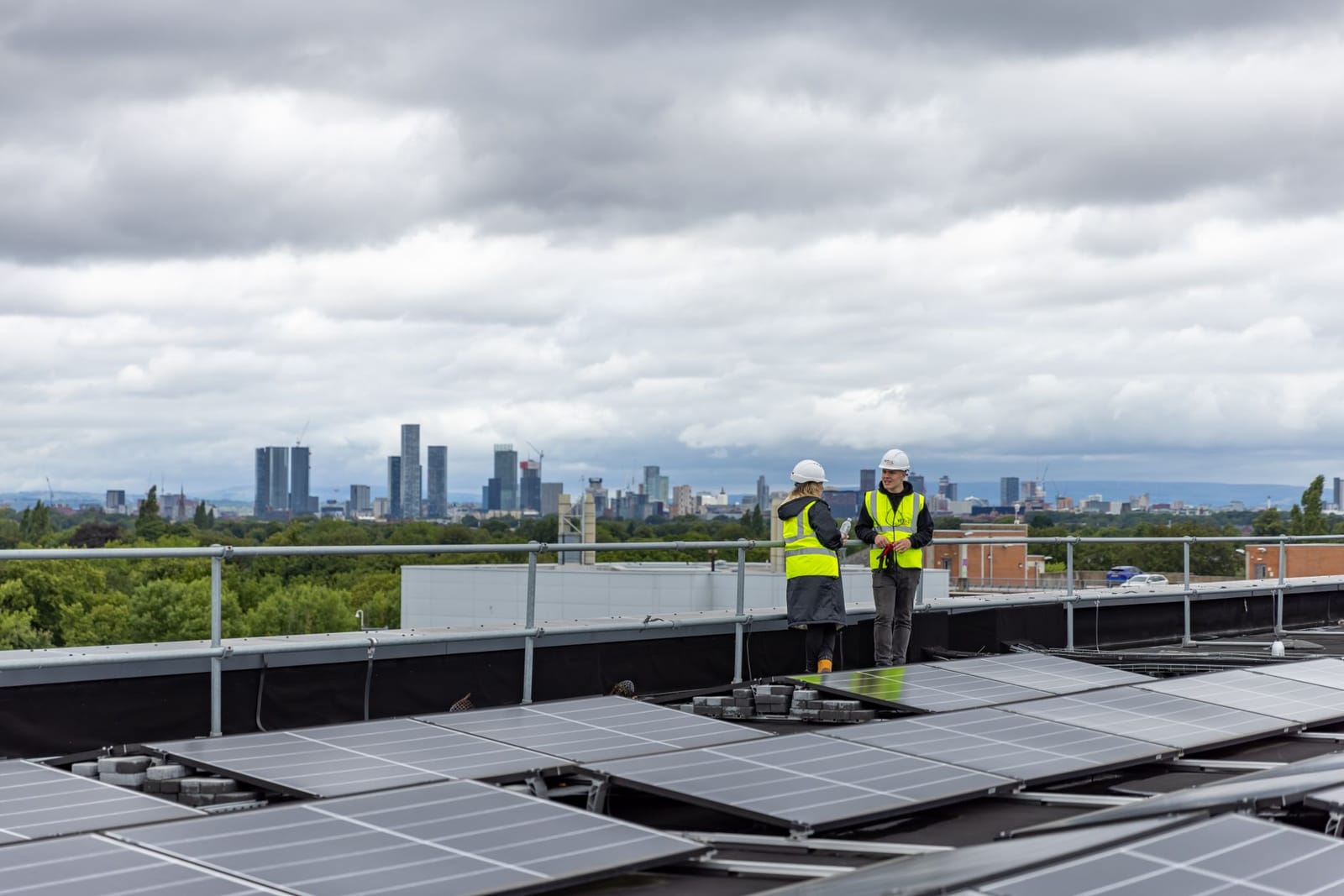
Worked example: 48 kWp on a green business loan, modelled cash-positive from year one
Illustrative scenario, not a real business: an owner-managed precision-engineering firm running CNC machinery on a single daytime shift wants solar without tying up the cash it needs for tooling. In this model it funds a 48 kWp rooftop system with a seven-year green business loan, owns it from day one and claims the Annual Investment Allowance.
From understanding your options to a clear decision
No hard sell. Understand the routes, model your numbers, then act on evidence.
- 01Start here
Understand your options
Read each funding route in plain English, then use the comparison to see which suit a business like yours.
- 02Two minutes
Model your own numbers
Put your electricity spend into the calculators to see the monthly saving next to the monthly payment for each route.
- 03Once you have a shortlist
Request a costed quote
When the direction is clear, send us your numbers and we reply by email.
- 04When you are ready
Choose and proceed
Pick the route that fits your cash position and tax profile, and proceed with MCS-certified installers and funders.
Business solar finance across the UK
Local grid, business-rates and grant context wherever you are. Pick your area for local detail.
London
Greater London. Local grid, grants and funding context for business solar.
Birmingham
West Midlands. Local grid, grants and funding context for business solar.
Leeds
West Yorkshire. Local grid, grants and funding context for business solar.
Sheffield
South Yorkshire. Local grid, grants and funding context for business solar.

Manchester
Greater Manchester. Local grid, grants and funding context for business solar.
Bradford
West Yorkshire. Local grid, grants and funding context for business solar.
Business solar finance, answered
The questions owner-managers and finance directors ask most.
How can a business finance solar panels?
There are six main routes: buy outright from cash, a business or green loan, hire purchase, asset finance, an operating lease, or a Power Purchase Agreement. Owning the system, through cash, a loan or hire purchase, keeps all the savings, export income and tax relief. A PPA or lease needs little or no capital but the funder keeps the asset and the relief. The right one depends on your cash position, tax profile and how long you will hold the building, which is what the comparison and calculators here are for.
Can my business get solar with no upfront cost?
Yes. Either a PPA, where a funder owns the system and you buy the cheaper power, or 100% finance, a green loan, hire purchase or lease repaid from the energy saving. Both aim to be cash-flow positive from day one. The trade-off is that zero upfront usually means giving up some ownership, tax relief or lifetime return, so it is worth modelling the true cost of each rather than just chasing the £0 headline.
Will the monthly finance payment be less than my energy saving?
Often yes, if the annual saving plus any export income beats the annual finance or PPA cost, which is the whole self-funding case. Whether it works for you depends on system size versus your consumption, your unit price, how much power you use on site and the finance rate, so it has to be modelled for your building. The finance calculator here shows the monthly payment next to the monthly saving so you can see the net position before you commit.
What tax relief can my company claim on solar panels?
For most installs the Annual Investment Allowance gives 100% first-year relief up to £1m, which at 25% corporation tax returns about 25p per £1 spent in year one. Solar is special-rate plant, so above the £1m cap a company can use the 50% first-year allowance with the balance written down at 6% a year. Solar does not qualify for 100% full expensing, which is main-rate only, so plan around the AIA and confirm with your accountant.
Should my business own the solar or use a PPA?
Own it if you have or can borrow the capital and want the maximum return, because ownership keeps every pound of saving, the export income and the tax relief. Use a PPA if you cannot commit capital, want no maintenance risk and will hold the building long enough to benefit, accepting a lower lifetime return in exchange. A middle path, hire purchase or a green loan, lets you own the asset and claim the relief while still paying monthly.
Are there grants for business solar?
Real capital grants for private business solar are limited. The main ongoing incentive is the Smart Export Guarantee, which pays you for exported electricity. The Public Sector Decarbonisation Scheme was public-sector only and closed to new applications in November 2024, and some regional business grants appear intermittently so are worth checking for your area. ECO4 and GBIS are domestic-only and do not apply to businesses, so treat 'free solar grant' marketing with care.
Get costed finance quotes for your business solar
Free to use, no obligation
- 1. Tell us about the building, its electricity spend and how you would like to fund it.
- 2. We reply by email with the funding routes worth comparing for your building.
- 3. You decide. There is no obligation, and the routes compared on this site help you check any quote.
- Every route compared
- No upfront options
- No obligation
- Free to use