Business solar finance in Hull
Work out how to fund a rooftop system for your business across Hull and the wider East Yorkshire area, including Beverley, Cottingham, Hessle. Every route explained, with the local grants and tax that change the maths.
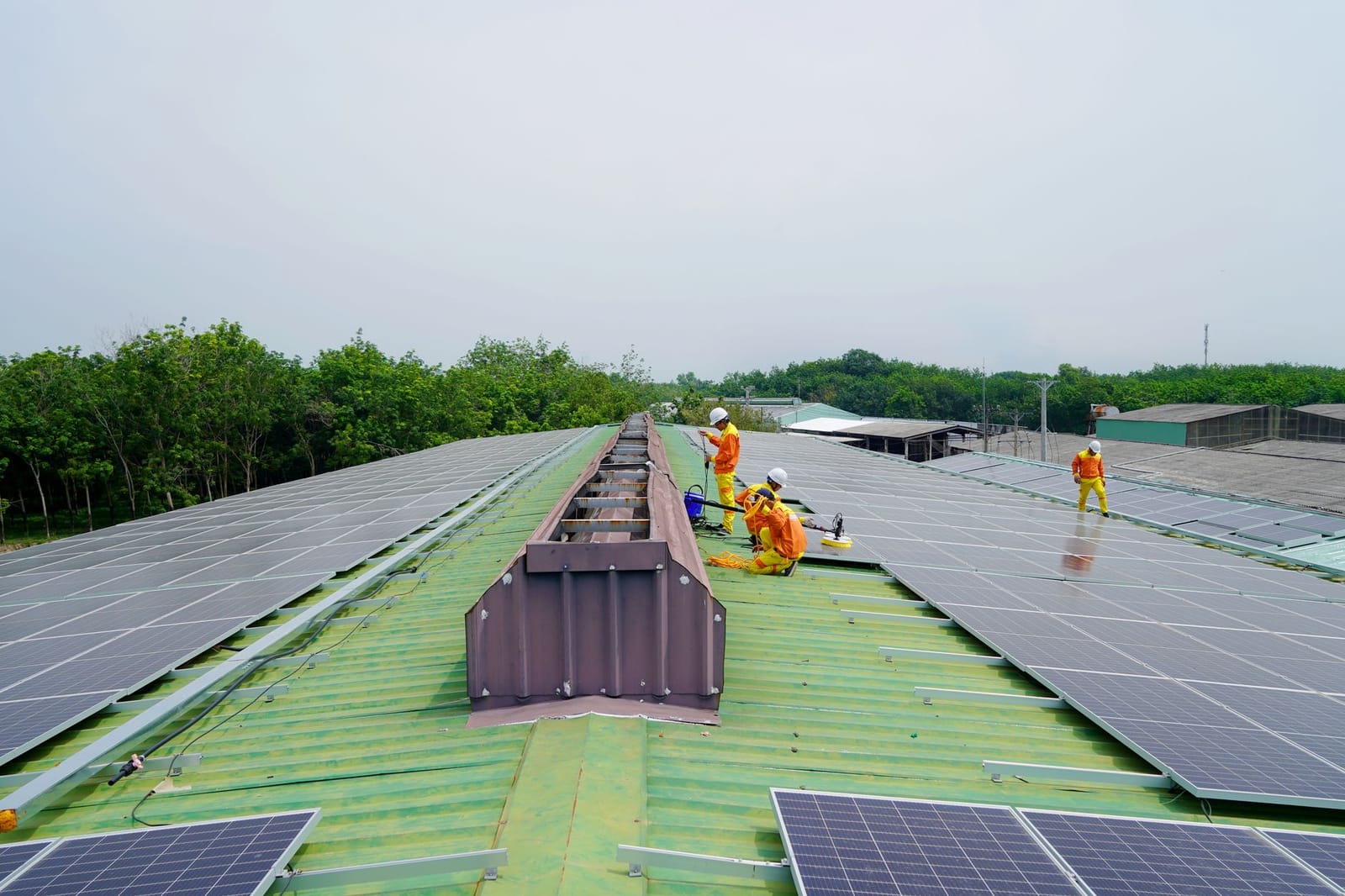
Hull’s funding decision has an unusual local edge
Most Hull businesses approach commercial solar by asking how many panels fit on the roof. The more useful question is how you intend to pay for them, because the funding route decides your cash position, your tax treatment and your return long before a module is fitted. Two identical arrays on two identical roofs in the same HU postcode can produce very different net outcomes depending on whether the owner bought outright, spread the cost through hire purchase, or signed a Power Purchase Agreement with no capital down. What makes Hull different is that the funding decision can tie into a Freeport allowance and a serious local decarbonisation agenda, which changes the after-tax maths for the owned routes.
With an electricity bill of around £36,000 a year (an illustrative figure, not a local average), precision on the funding structure earns its keep. Size to demand rather than roof area: a smaller SME suits 10 to 50 kWp, a mid-size industrial roof around Priory Park or Stoneferry 50 to 250 kWp. The return comes from self-consumption, because a unit generated and used on site displaces 26 to 32p of grid import against only 3 to 15p for export. A firm on Priory Park with steady daytime demand and cash reserves may be best served buying outright and keeping every unit of generation. A tighter operation at Hull Marina, or a growing manufacturer near Saltend that would rather protect working capital, often does better spreading the cost so the monthly repayment sits below the energy saving from day one. There is no single right answer, which is why it pays to model the routes before committing.
The routes, and how the Humber grid shapes them
The practical choices are buying outright through capital purchase, spreading the cost via hire purchase or asset finance, using an operating lease, or taking a Power Purchase Agreement where a funder owns the panels and you buy the cheaper electricity they generate. A business solar loan and genuinely no-upfront-cost structures sit alongside these for firms that want the savings without touching reserves. Each carries a different mix of ownership, balance-sheet effect and available allowances, so compare them properly rather than by instinct on our funding routes compared page, and model each against your own bill with the finance calculator.
Hull sits in Northern Powergrid’s distribution area, and a longer or more expensive connection changes the payback on an outright purchase more sharply than it changes a PPA, where the funder often carries that risk, so the connection position belongs in your funding maths from the start. On tax, remember that solar is special-rate plant and so does not qualify for 100% full expensing; the Annual Investment Allowance gives 100% first-year relief up to £1m and covers effectively every Hull install. The tax and grants page sets out what applies.
Freeport allowances, the cluster and a Hull scenario
Self-consumed rooftop solar benefits from a 100% business-rates exemption in England to 31 March 2035, which improves the case for owning the system rather than renting the output. The Humber Freeport also unlocks enhanced capital allowances for qualifying investment in its designated sites, and with the Saltend chemical cluster driving one of the country’s larger industrial decarbonisation programmes, Hull businesses have unusually relevant local context for tying a solar investment into a wider carbon plan. Check whether your premises fall within a designated site before relying on the allowance, and confirm the specifics with your accountant, as this is general information rather than tax advice.
Picture a mid-size firm on Priory Park spending close to £36,000 a year on power. Funded through asset finance or an operating lease, the repayments can be structured to sit under the projected energy saving, so the array supports its own cost from the first bill while the business keeps its cash for trading. Owned outright, it captures the full saving and the rates exemption but draws down reserves. These are representative, indicative 2026 figures, not a named client. To test the return, work through the payback and ROI breakdown; for a costed system price, see the commercial solar cost guide.
Serving Beverley, Cottingham and Hessle as well as central Hull, the sensible next step is to model your own numbers, then get real figures. Compare the finance companies or have a quote costed for your Hull roof rather than working off estimates.
Postcodes covered in Hull
- HU1
- HU2
- HU3
- HU4
- HU5
- HU6
- HU7
- HU8
- HU9
- HU10
- HU11
- HU13
- HU16
- HU17
Other areas we cover
Modelled your Hull numbers? Request a costed quote
Free to use, no obligation
- 1. Tell us about the building, its electricity spend and how you would like to fund it.
- 2. We reply by email with the funding routes worth comparing for your building.
- 3. You decide. There is no obligation, and the routes compared on this site help you check any quote.
- Every route compared
- No upfront options
- No obligation
- Free to use