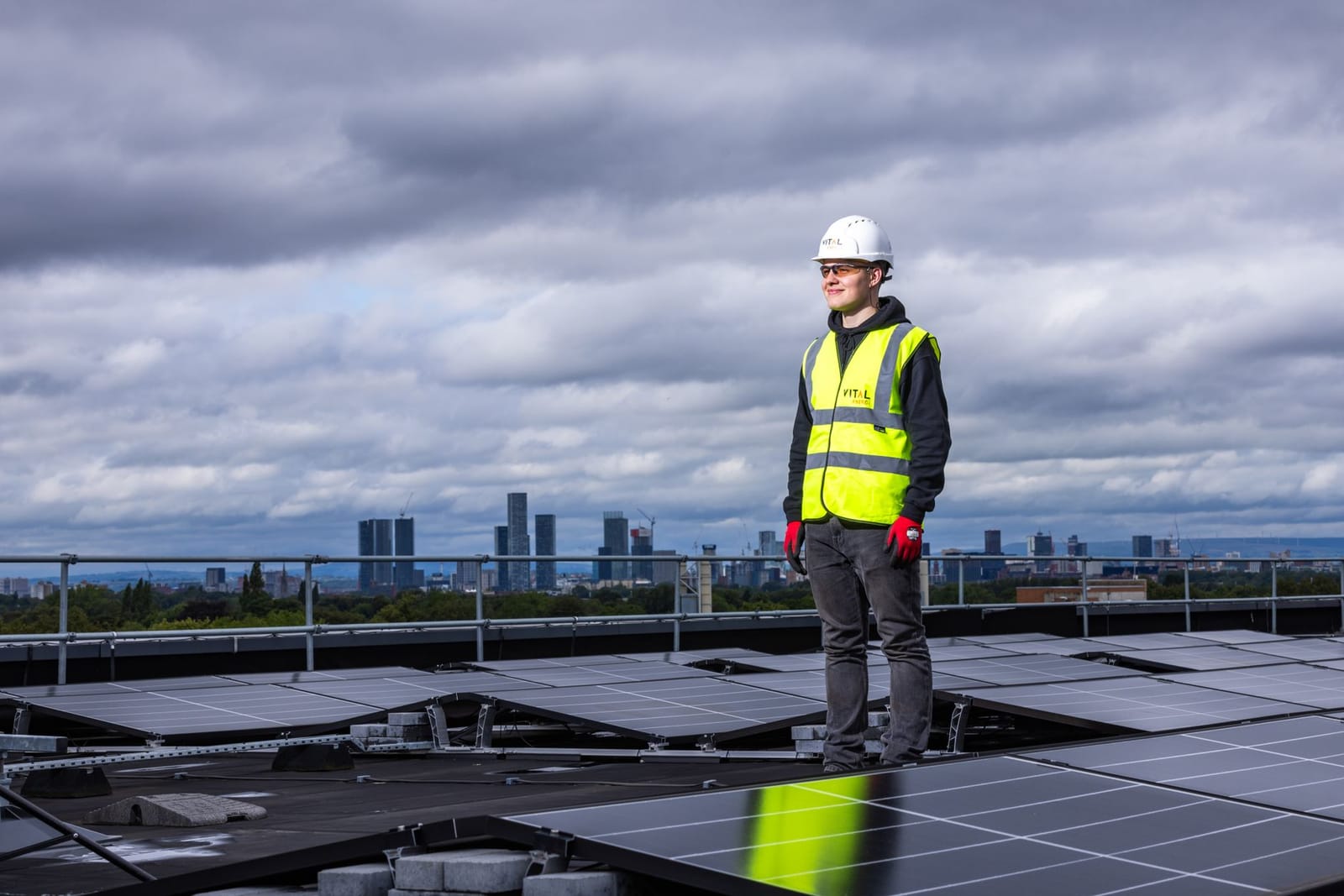
How no upfront cost / fully funded works when a business funds solar
No upfront cost, fully funded, 100% finance and zero deposit are marketing labels rather than distinct products. Each one resolves to something already on this site: usually a PPA, where a funder owns the system and you buy the power, or 100% hire purchase, asset finance or a green loan, where you own it and repay from the energy saving. The shared promise is that the saving covers the payment so the system pays for itself from day one. The right question is never the label but the structure beneath it: who owns the asset, who gets the tax relief and export income, what it really costs over the full term, and how you exit. Ask that and 'fully funded' stops being a black box.
"Fully funded" is a promise, not a product
No upfront cost, fully funded, 100 per cent finance, zero deposit: these are the phrases business owners hear most, and they are marketing labels rather than distinct products. If a lease is the one on offer, this lease against buying comparison shows what it costs against buying. Every one of them resolves to something already on this site. Usually it is a Power Purchase Agreement, where a funder owns the system and you buy the power, or it is 100 per cent finance through hire purchase, asset finance or a green loan, where you own the system and repay from the energy saving. The shared pitch is that the saving covers the payment, so the system pays for itself from day one and no cash leaves your account to get it installed. That can be a sensible trade, but the label tells you nothing until you find the structure beneath it.
The two structures underneath
Under a PPA, the funder pays for and owns the panels, inverters and installation, and you sign a long agreement, often 10 to 25 years, to buy the power at an agreed unit rate below your grid price. You put in no capital and carry no maintenance responsibility, but because you never own the asset during the term, the tax relief and any export income sit with the funder. A wider version of the same idea, where one provider owns and runs several technologies for a single fee, is energy as a service (EaaS). Under 100 per cent finance the picture inverts: a lender advances the full cost, you repay over a fixed term, commonly two to seven years, and you own the system, so the savings, the tax relief and the export income are yours. The monthly repayment is a real debt on your books until the term ends, after which the generation is effectively free for the rest of the panels' life.
Why the structure decides the tax
Ownership decides who benefits from the reliefs. Solar is special-rate plant, so it never qualified for full expensing; it does qualify for the Annual Investment Allowance, giving 100 per cent first-year relief on up to £1m of qualifying spend, which covers most installs, with the 50 per cent special-rate first-year allowance for company spend above the cap. Under 100 per cent finance you own the asset and claim all of that; under a PPA the funder owns it and claims it instead, which is part of how the funder makes its numbers work. The same split applies to Smart Export Guarantee income. VAT at 20 per cent is reclaimable if you are VAT-registered. This is general information, not advice, so confirm your own position with your accountant.
The question to ask
Read past the "zero cost" headline to the structure. Ask who owns the asset, who keeps the tax relief and export income, what it costs over the full term against just buying, and how you exit. On a PPA check the annual escalator, the tie-in length and the buy-out schedule; on finance check the total repayable, any balloon and the early-settlement terms. In almost every case, zero upfront means giving up some ownership, tax relief or lifetime return in exchange, so it should be a decision made with the full-term numbers in front of you. Model a PPA against 100 per cent finance for your building in the finance calculator, then see the gap in pounds on the payback and ROI page.
Zero upfront solar for business: the agreements behind the offer
Zero upfront solar for business is usually built on one of the agreements below. Two are explained above: an on-site power purchase agreement, where a funder owns the system and sells you the electricity, and 100% finance through hire purchase, asset finance or a business or green loan, where you own the system and repay from the saving. An operating lease sits between them, with a lessor owning the kit while you pay a rental. This section adds the rooftop lease: you lease your roof space to a funder, which installs and owns the panels and sells the power to you, exports it, or both. The monthly figure matters less than the paperwork, because the paperwork decides what happens to your building, who can claim the capital allowances on the panels and what you are left with at the end. For how the same routes apply beyond solar, see renewable energy finance for business.
| Agreement | Who owns the panels during the term | Rights over your building | At the end |
|---|---|---|---|
| On-site power purchase agreement | The funder | The funder needs a right to keep its equipment on your roof, by a lease or a licence. In England and Wales a lease of more than seven years must be registered. | Transfer to you, extension or removal, as the contract sets out |
| 100% finance: business loan or hire purchase | You: from day one with a loan, or once the contract is completed under hire purchase | None beyond any security the lender takes | You own the system outright |
| Operating lease | The lessor | Access for the lessor to maintain and eventually remove its equipment | Return, extend or buy, as the lease sets out |
| Rooftop lease | The funder | A lease of your roof with access and cable rights. In England and Wales a lease of more than seven years must be registered at HM Land Registry. | Hand-back, removal or transfer, as the lease sets out |
Rooftop leases: when a funder rents your roof
A rooftop lease is a property transaction, not a finance agreement. If you would rather the roof earned rent, see how to rent your roof for solar panels. The funder takes a lease of the roof, or part of it, installs panels it owns and needs rights to reach them: access for maintenance, space for inverters and routes for cables through your building. Depending on the deal, your business gets cheaper electricity, a rent, or both. Because it is a lease of your property, three things follow.
- It goes on your title. In England and Wales, a lease granted for a term of more than seven years is compulsorily registrable at HM Land Registry, as HM Land Registry practice guide 25 sets out, and when the lease is granted out of a registered title a notice of it is entered on the register. A buyer of registered land takes it subject to interests protected by such a notice, so the lease stays with the building when you sell.
- Somebody else may need to agree. If you rent the building, your lease will normally require the landlord's consent before you grant anyone rights over the roof, and your tenancy may end before the solar agreement does, so the funder may need rights from the landlord directly. If the building is mortgaged, check whether the mortgage terms require the lender's consent before you grant a lease of any part of it.
- A sale or refinance needs planning. A power purchase agreement that sits alongside the lease is a contract with your business, so check before signing whether it can be transferred to a buyer and what ending it early would cost. Have a solicitor review the lease itself, because it will bind the building for its whole term.
Who owns the panels when the agreement ends?
Solar panels can outlast the agreement that paid for them. The Energy Saving Trust expects panels to last 25 years or more and inverters to need replacing after around 12 years, so the end of a power purchase agreement or roof lease is rarely the end of the system's useful output. The contract will set out what happens next, and it will be one of three outcomes or a mix of them:
- Transfer to you. The funder hands the system over, at no charge or at a price the contract fixes or leaves to a valuation. Before accepting, check what remains of the panel and inverter warranties and who pays for the next inverter.
- Extension. The agreement continues on new terms. Ask how the new price will be set before you sign, not at renewal.
- Removal. The funder takes the system away. The contract should say who pays for removal and for making good the roof, and the condition the roof must be left in.
With 100% finance none of this arises: with a loan you own the system from the start, and under hire purchase ownership passes to you once the contract is completed. That is why a fair comparison of the routes runs to the end of the panels' life rather than the end of the agreement. The payback and ROI page is the place to run it.
Questions to ask before you sign
The pricing checks (escalator, tie-in, buy-out schedule and total repayable) are covered above. These questions decide how a zero upfront agreement behaves over years of real use in your building. If a provider calls a deal interest-free, our guide to 0% solar loans for business explains where the finance cost usually sits.
- Term against asset life. Compare the agreement's length with the panels' expected life and the warranty periods, and ask who replaces the inverter during the term.
- How the price moves. A fixed unit rate, a fixed annual uplift and a link to an inflation index such as RPI or CPI produce very different costs over a long term. Ask for the price path in writing.
- If your use falls. Check whether you must pay for a minimum amount of electricity, and what happens if you cut shifts, sublet or close the site.
- Roof works during the term. Repairs under the array mean taking the panels off and refitting them. The agreement should say who pays for that, who does the work, and whether you owe the funder for generation lost while the panels are off.
- Insurance. Confirm who insures the panels against damage and third-party claims, and tell your buildings insurer before installation.
- Grid connection. Anything above 16 A (3.68 kW) per phase needs G99 permission from the distribution network operator before it connects. Ask who makes the application and who pays if the network operator requires works or an export limit.
- Accounting. For accounting periods beginning on or after 1 January 2026, FRS 102 treats a contract as a lease if it conveys the right to control the use of an identified asset, whether or not it is called a lease. Whether a particular on-site power purchase agreement meets that test turns on details such as who designed the system and who directs how it is used, so if balance-sheet treatment matters, confirm it with your accountant before you sign.
Pros
- Removes the capital barrier entirely
- Can be cash-flow positive from the first month
- Gets solar cutting bills without tying up cash
Trade-offs
- Usually means giving up some ownership, tax relief or lifetime return
- The funder's margin has to come from somewhere
- The label tells you nothing until you find the structure
Zero-capital only means something once you see the real structure and figures underneath it: request a no-upfront-cost quote. Still weighing this against the alternatives? Line every funding route up side by side before you decide.