Is energy as a service on or off the balance sheet?
Published 14 October 2026 · SEO Dons Editorial
Editorial standards: figures are cross-checked against gov.uk capital-allowances guidance and Ofgem Smart Export Guarantee rates, and updated as rules change. We are independent, so no funder relationship influences these comparisons. General information, not financial or tax advice, confirm your position with your accountant.
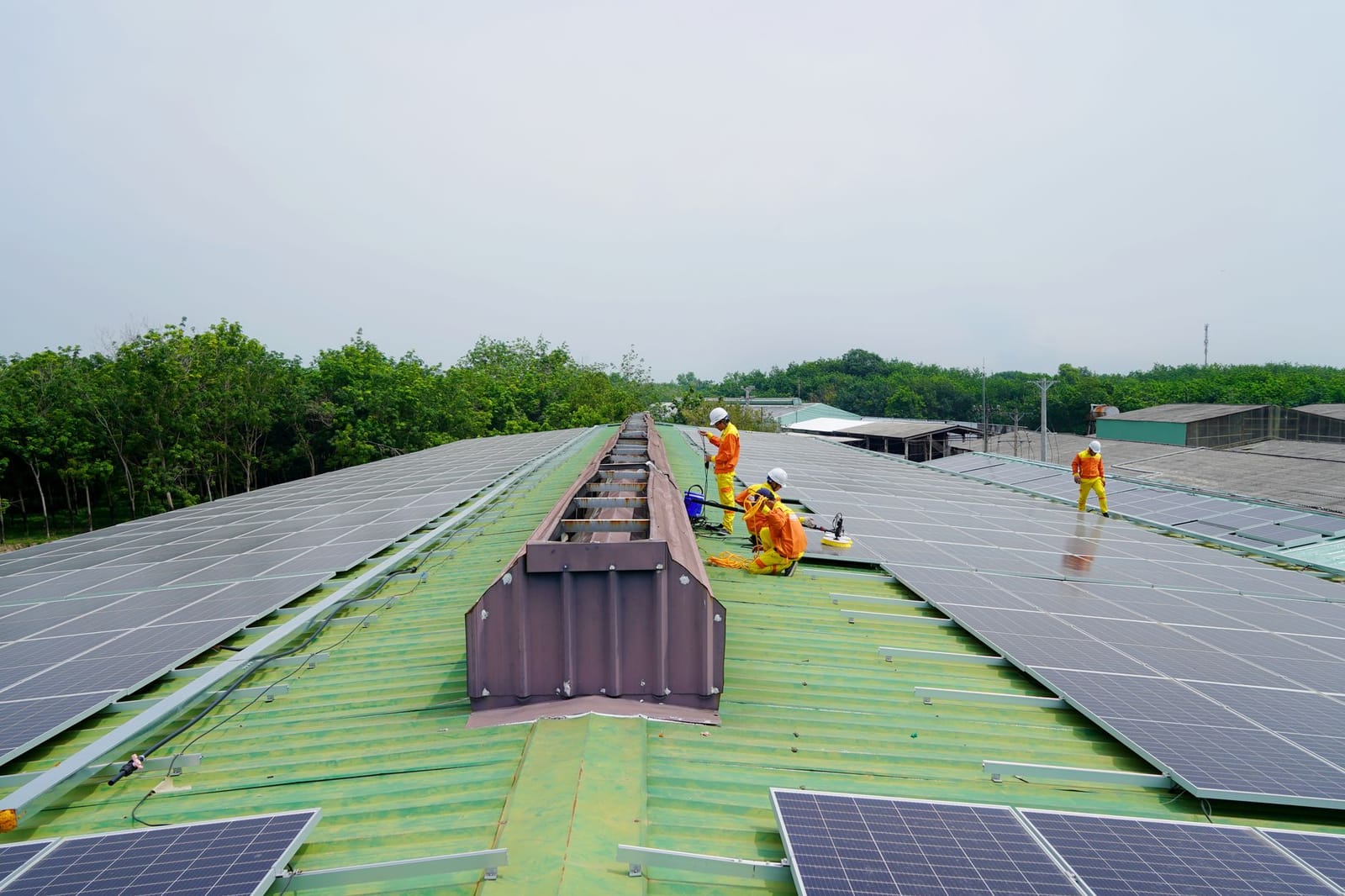
Finance directors comparing energy as a service offers often ask the same thing first: will this sit on the balance sheet? For a UK company reporting under FRS 102, the honest answer from 2026 is that it depends on whether the contract contains a lease, which is a question about the contract's substance, not its name. This guide works through the test as the Financial Reporting Council (FRC) sets it out, then covers what goes on the balance sheet, the exemptions, who is unaffected, what it means for loan covenants and why the tax position has barely moved.
The short answer
The FRC completely rewrote Section 20 Leases of FRS 102 in its Periodic Review 2024, issued on 27 March 2024, with the changes effective from 1 January 2026. Most of the amendments apply to accounting periods beginning on or after that date, and early adoption was permitted. Based on the principles of IFRS 16 Leases, the new section removes the distinction between operating and finance leases for lessees. HMRC's leasing manual puts the effect plainly: the distinction between on-balance sheet leases (finance leases) and off-balance sheet leases (operating leases) for lessees has gone, and a lessee now recognises all leases on its balance sheet except certain exempted leases.
So an energy as a service contract is on the balance sheet to the extent that it contains a lease and no exemption applies. If it contains no lease, the fee is a service cost and stays in the profit and loss account. The rest of this guide is about telling the two apart.
Why the old off-balance-sheet pitch is now often wrong
Under the previous version of FRS 102, an operating lease was charged as a straight-line expense, and the asset and the obligation stayed off the lessee's balance sheet. An energy contract that amounted to an operating lease, or to no lease at all, therefore left both the equipment and the commitment off the customer's balance sheet. That logic no longer holds for FRS 102 reporters, because the operating lease category has been removed for lessees. The rules apply to every entity using FRS 102, including small entities reporting under Section 1A, so being a small company is not an escape route.
The trap is that a contract does not need to be called a lease to contain one. The FRC points out that some contracts without the legal form of a lease do in substance meet the definition and so fall within Section 20, and it expects preparers to satisfy themselves that they have identified all relevant contracts. A document headed "energy services agreement" or "solar as a service" gets no special treatment because of its title.
Step 1: does the contract contain a lease?
A contract is, or contains, a lease if it conveys the right to control the use of an identified asset for a period of time in exchange for consideration. The assessment is made when the contract is entered into and revisited only if its terms change. For an energy as a service contract, work through three questions.
Is there an identified asset?
A specific array, battery or heat pump on your site is usually identified, either because the contract specifies it or because it is the one installed. But there is no identified asset if the supplier has a substantive right to substitute the asset throughout the period of use, and if there is no identified asset, there is no lease. A substitution right is substantive only if the supplier has the practical ability to swap in other assets and would benefit economically from doing so. For equipment bolted to your roof and wired into your building that is a high bar, and where you cannot readily tell, the standard says to presume that the right is not substantive. A share of a larger system that is not physically distinct is not an identified asset unless it is substantially all of its capacity.
Do you get substantially all the economic benefits?
The benefits from using an asset include its primary output and its by-products. If your business takes all, or nearly all, of the electricity an array produces, this condition may well be met. If the provider exports a large share of the output or sells it to someone else, it may not be.
Do you direct how and for what purpose it is used?
For energy equipment this is often where the judgement lies. You have the right to direct use if you decide how and for what purpose the asset is used. Where those decisions are predetermined, as they largely are for a solar array that generates whenever the sun shines, you still have that right if you operate the asset (or direct others to operate it as you decide), or if you designed the asset, or specific aspects of it, in a way that predetermines how and for what purpose it will be used. Under energy as a service the provider usually designs, operates and maintains the equipment, so read the operating and design clauses closely: who decides when a battery charges and discharges, who sets the heating and cooling schedules, and who specified the system.
Step 2: separate the service from the lease
An energy as a service fee pays for more than the use of equipment. Maintenance, monitoring and other services are non-lease components, and the consideration is split between the lease and non-lease components on the basis of their relative stand-alone prices. Only the lease part goes into the lease liability. There is a practical expedient: a lessee can elect, by class of underlying asset, not to separate them and to treat each lease component and its associated services as a single lease component. That is simpler, but it puts the service element on the balance sheet as well, so it is worth asking the provider to price the elements separately even if you later choose the expedient.
Step 3: work out which payments go into the liability
Where there is a lease, the liability is the present value of the lease payments still to be made. They include fixed payments, including in-substance fixed payments; variable payments that depend on an index or a rate, measured at the index or rate at the commencement date; any purchase option you are reasonably certain to exercise; and amounts due under residual value guarantees and certain termination penalties.
What they leave out matters most for energy contracts. Variable payments that do not depend on an index or rate are not included in the liability; the FRC's example is a turnover rent, and such payments are recognised in profit or loss in the period in which they are triggered. A charge per kWh generated behaves the same way. So a contract priced purely per unit may carry only a small lease liability even if it contains a lease, while a fixed monthly fee for the same equipment would put most of the payments on the balance sheet. Watch for payments that look variable but are in substance unavoidable, such as a guaranteed minimum annual charge: the standard treats payments that cannot in substance be avoided as in-substance fixed payments.
The payments are discounted at the interest rate implicit in the lease if it can be readily determined. If it cannot, the lessee can choose, lease by lease, between its incremental borrowing rate and its obtainable borrowing rate, so the provider's willingness to disclose its pricing affects your numbers too.
Step 4: check the exemptions
Two recognition exemptions let a lessee keep a lease off the balance sheet and expense it much as operating leases used to be expensed, on a straight-line or other systematic basis, and both are voluntary. A short-term lease is one with a lease term of 12 months or less at commencement and no purchase option, which a multi-year energy contract will only meet if, in substance, either side can walk away within the year with no more than an insignificant penalty. Leases of low-value assets can also stay off, but Section 20 sets no value threshold. The FRC's examples are tablets and personal computers, small items of office furniture and telephones, and it is not possible to keep a lease off the balance sheet by breaking the asset down into low-value components. A rooftop array, a battery system or a heat pump installation is unlikely to qualify.
Who the change does not touch
- Micro-entities using FRS 105. The FRC made no equivalent change to FRS 105, so the lease accounting it already required continues.
- Companies and groups reporting under IFRS. Nothing new for them: IFRS 16 replaced IAS 17 for accounting periods beginning on or after 1 January 2019, and the same right-of-use model has applied since.
- The provider. Accounting by lessors remains largely unchanged, and the operating and finance lease distinction stays in place for them. A provider's own accounts are no guide to how the contract looks on yours.
What changes in the accounts, and for loan covenants
According to the FRC, a business that previously had operating leases is likely to show increased assets and liabilities, lower rental expense and higher depreciation and interest, with the principal part of its payments now shown as a financing cash outflow. Interest is typically front-loaded, so the liability usually exceeds the right-of-use asset during the life of a lease, even though the timing and amount of the cash paid are unchanged. On first application the cumulative effect is taken to equity and comparatives are not restated.
The FRC also warns that gearing, interest cover, current ratio and EBITDA may change, with implications for assessing loan covenant compliance, and that some entities may want to renegotiate covenants. There is no single answer for every facility, so raise these questions with your lender before signing an energy contract:
- Will the lease liability count as debt in your gearing and leverage tests?
- Are covenants measured on the accounting standards in force when the facility was signed, or on current standards?
- Does the facility restrict new leases, new security or new interests over the property, and does the energy contract or roof lease need consent?
- Will an earnings measure such as EBITDA be adjusted, given that the fee partly becomes depreciation and interest?
The tax position has not changed
For tax, the accounting change was meant to be neutral for lessees. HMRC's Business Leasing Manual says legislation in Schedule 14 to the Finance Act 2019 aimed to ensure that new or revised accounting standards did not change the tax treatment of lessees, and that commercially nothing has changed for a lessee that adopts them. Lease rentals are revenue expenditure regardless of the accounting treatment, unless there are exceptional circumstances, and in most cases the amount deductible equals the depreciation and the interest on the lease liability recognised in the accounts.
The same basic principles remain, including the need to test whether a lease is a long funding lease. That test matters for who claims the capital allowances. Generally, allowances go to the legal owner of the asset whether a lease is a finance or an operating lease, but under a long funding lease the lessor loses the right to claim them and the lessee generally gains it. For fixtures such as roof-mounted panels there are further rules, covered in who claims capital allowances on solar panels.
Questions to ask before you sign
- Has the provider identified the specific equipment, and does it have any right to substitute it?
- Who operates the equipment day to day, and who designed it?
- What share of the output does your business take, and who keeps any exported power?
- Which payments are fixed, which are index-linked and which vary with output?
- Will the provider give separate stand-alone prices for the equipment and the services?
- Is there a purchase option, and how likely are you to use it?
- Has your auditor reviewed the lease assessment, and has your lender confirmed the covenant treatment?
If the answers show a lease you would rather not carry, compare the alternatives on the same footing: an operating lease of the equipment is now accounted for in much the same way, a power purchase agreement priced per kWh can carry a small liability, and buying outright puts the asset on your balance sheet but leaves you the savings and the allowances. Finance options compared and buy vs lease vs PPA set the routes side by side.
This guide is general information, not accounting or tax advice. The lease assessment turns on the exact terms of each contract, so check your own position with your auditor or accountant, and with HMRC where the tax treatment is uncertain, before you commit.
Questions business owners ask
Is energy as a service off balance sheet?
Not automatically. For UK companies using FRS 102, accounting periods beginning on or after 1 January 2026 bring a contract onto the balance sheet to the extent it contains a lease: an identified asset, plus your rights to obtain substantially all its economic benefits and to direct its use. If the provider has a substantive right to substitute the equipment, there is no identified asset and no lease. Payments that are purely variable, such as a charge per kWh generated, stay out of the lease liability even where there is a lease.
Does the FRS 102 lease change apply to small companies?
Yes. The FRC says the recognition, measurement and presentation requirements of the revised Section 20 apply to all entities using FRS 102, including small entities reporting under Section 1A. Micro-entities using FRS 105 are different: the FRC made no equivalent change to FRS 105.
Can a PPA contain a lease under FRS 102?
It can. The test is the same for a PPA as for any energy as a service contract: an identified asset, the right to obtain substantially all its economic benefits, which include its primary output, and the right to direct its use. Where a PPA does contain a lease, payments per kWh generated are variable payments that do not depend on an index or rate, so they are charged to profit or loss as they arise rather than measured into the lease liability.
Does the tax treatment change with FRS 102?
HMRC's leasing manual says legislation in Schedule 14 to the Finance Act 2019 aimed to ensure new or revised accounting standards did not change the tax treatment of lessees, and that lease rentals are revenue expenditure regardless of the accounting, barring exceptional circumstances. In most cases the deduction equals the depreciation and interest in the accounts. The long funding lease test still has to be run, because under a long funding lease the lessee generally gains the capital allowances.
Will the change affect my loan covenants?
It may. The FRC says gearing, interest cover, current ratio and EBITDA may change, with implications for assessing loan covenant compliance, and that some entities may want to renegotiate covenants. Ask your lender how it will treat a new lease liability, and whether it needs to consent to the contract, before you sign.
Related guides
Ready to move from theory to real numbers?
Free to use, no obligation
- 1. Tell us about the building, its electricity spend and how you would like to fund it.
- 2. We reply by email with the funding routes worth comparing for your building.
- 3. You decide. There is no obligation, and the routes compared on this site help you check any quote.
- Every route compared
- No upfront options
- No obligation
- Free to use