Who claims capital allowances on solar panels on a rented or leased building?
Published 28 September 2026 · SEO Dons Editorial
Editorial standards: figures are cross-checked against gov.uk capital-allowances guidance and Ofgem Smart Export Guarantee rates, and updated as rules change. We are independent, so no funder relationship influences these comparisons. General information, not financial or tax advice, confirm your position with your accountant.
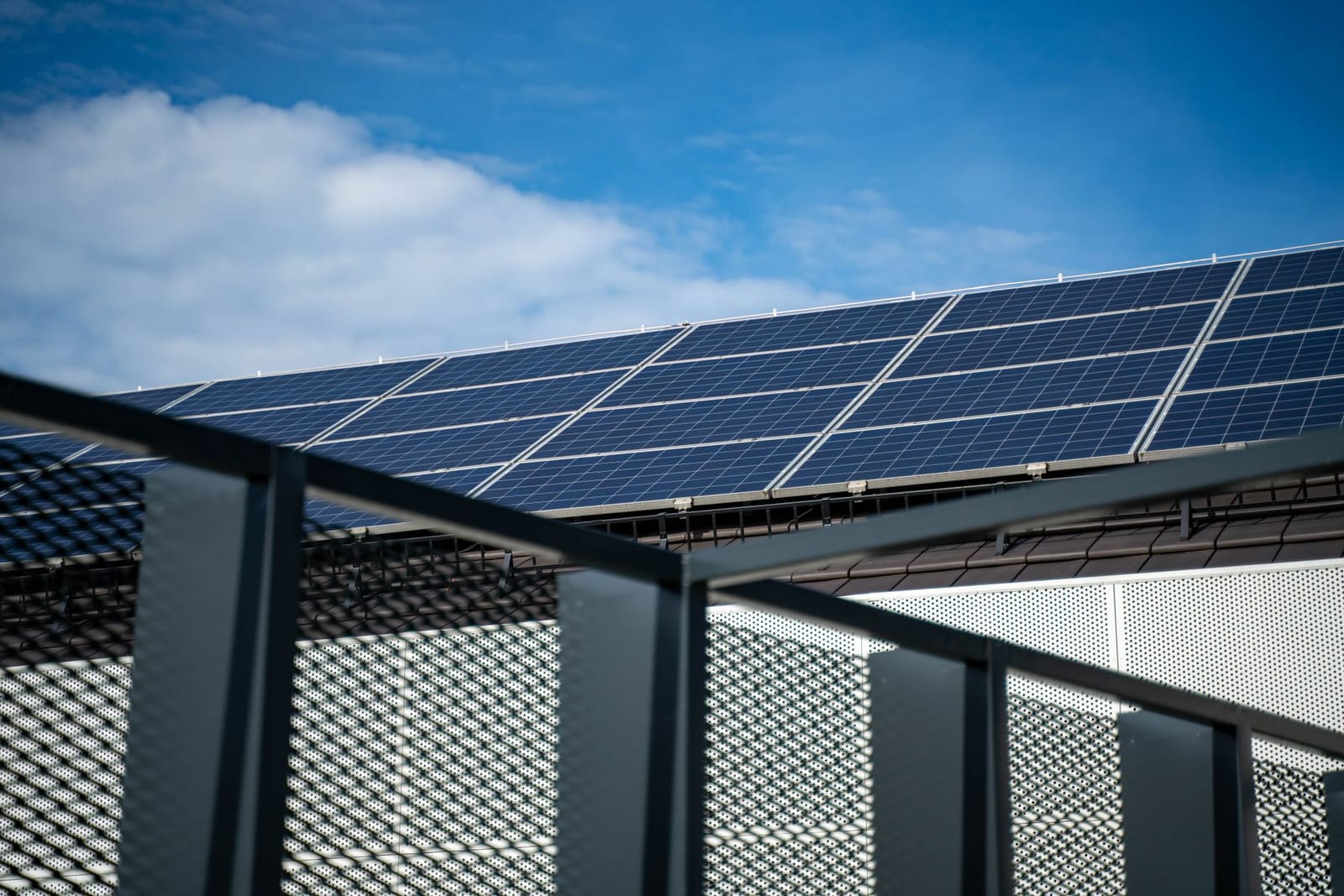
A business pays for panels on a building it rents, and nobody is sure whether the tenant, the landlord or the finance company gets the capital allowances. The answer lies in rules most businesses never meet until they fix something to a building. This guide covers who claims. For what the claim is worth once it is yours, see the main guide to capital allowances on solar panels. It is general information, not tax advice: confirm your position with your accountant.
Why legal ownership is not the test
Plant and machinery allowances normally go to the owner of an asset. Leases, PPAs and service contracts change who that is; the guide to tax relief by finance route maps each route. HMRC's Capital Allowances Manual lists solar panels among the items that "will normally be regarded as fixtures", and in law "a fixture belongs to the freeholder of the land". Before special rules arrived in 1985, a tenant that paid for a fixture could claim nothing.
Those rules now sit in Part 2, Chapter 14 of the Capital Allowances Act 2001 (sections 172 to 203), which decides who is treated as owning a fixture for tax. The core rule, in section 176, treats a person as the owner when three conditions are met:
- the person incurs capital expenditure on the plant for a qualifying activity it carries on, such as a trade or a UK property business;
- the plant becomes a fixture; and
- the person has an interest in the building or land at the time the plant becomes a fixture.
HMRC's summary is blunt: "Actual ownership is irrelevant." What matters is who paid, and what interest they held in the building on the day the panels went up.
What counts as an interest in land
Section 175 covers the freehold (or an agreement to buy it), a lease, an easement and a licence to occupy land. HMRC reads the last one narrowly: a licence counts only if it is exclusive, and a right to come onto land for "a subordinate purpose" is something less. A trading company that occupies a building owned by its director or a sister company, with nothing in writing, should put a lease or licence in place before installation, because the test is applied when the panels become fixtures.
A mortgage does not move the claim: the fixtures rules treat a mortgaged interest as held by the borrower, not the lender (section 175(2)).
When the tenant pays
A tenant that pays for panels for its own trade, and holds a lease when they are fitted, meets all three conditions. Whether the lease lets a tenant fit panels at all is a separate question, usually settled in a green lease or the alterations clause. HMRC's worked example is a tenant installing air conditioning in a leased office: because it holds "a leasehold interest in the relevant land when the air conditioning becomes a fixture", it can claim. The property-law distinction between tenant's and landlord's fixtures "is not relevant for the fixtures legislation".
If landlord and tenant both pay towards the same system, HMRC says "the fixture is treated as belonging only to the person with the lowest interest", normally the tenant. A landlord that instead contributes a capital sum to the tenant's cost may claim on its contribution under sections 537 and 538.
When the lease ends, the tenant is treated as ceasing to own the panels (section 188), and the landlord is treated as the owner from then on (section 193). Its disposal value is any capital sum it receives for the panels, such as compensation from the landlord, or nil if it receives nothing.
When the landlord pays
A commercial landlord that pays for panels on a building it lets holds the freehold or a head lease and carries on a property business, so it claims under section 176 in the same way.
Residential lettings are the exception. In a property business, expenditure on plant "for use in a dwelling-house" is not qualifying expenditure (section 35). HMRC's own example is a landlord who installs ground-mounted panels in the garden of a let house to power that house: no allowances. A block of residential flats is not itself a dwelling-house, so HMRC accepts that equipment serving only the common parts can qualify, and mixed use is apportioned on a just and reasonable basis.
When a finance company is involved
The funding route changes the answer only where the funder, rather than your business, incurs the expenditure.
- Business or green loan. The lender lends; your business buys the panels, so section 176 is applied to you as normal.
- Hire purchase. HMRC says "the hire purchase legislation does not apply to an asset that is a fixture"; the fixtures rules decide instead. A hirer with the freehold or a lease is the owner under section 176; one the fixtures rules do not treat as owner is treated as ceasing to own the panels when they become fixtures and must bring in a disposal value (section 69). More on hire purchase for solar.
- Equipment lease. A lessor with no interest in the building is treated as the owner only if lessor and lessee jointly elect under section 177. They must not be connected, the lessee must have been entitled to claim had it paid itself, and the lease cannot be for use in a dwelling-house (section 178). For corporation tax, the election is due within two years of the end of the chargeable period in which the expenditure was incurred. Once it is made, the lessee cannot claim under section 176. Ground-mounted arrays on land that is not a building have a separate lessor route (section 179), which still needs the election. If you are comparing an operating lease, ask the funder whether it needs this election from you.
- Long funding lease, including sale and finance leaseback. Where the lease is a long funding lease, the fixtures chapter does not apply (section 172A) and the lessee is treated as the owner (section 70A). If you sell panels you already own to a funder and lease them back on a finance lease, that lease cannot be a short lease, whatever its term (section 70I(10)). You keep claiming as lessee, but no annual investment allowance or first-year allowance is given on the leaseback, and the qualifying cost is capped at the disposal value you bring in on the sale (section 70DA). A company deducts only the finance charges within the rentals (Corporation Tax Act 2010, section 377).
When a PPA or energy services provider owns the kit
Under a power purchase agreement, the host business buys electricity rather than panels. It incurs no capital expenditure on the system, so it has nothing to claim.
The provider's position depends on its rights over the roof. A provider holding a lease of the roof space, an easement or an exclusive licence has an interest in land in its own right and can fall within section 176. One with bare access rights does not, on HMRC's reading of licences.
The alternative is section 180A, which lets an energy services provider claim on fixtures in a client's building by joint election. Its conditions are narrow: the agreement must link payments to "energy savings or increases in energy efficiency" (section 175A), the client must have an interest in the land and the provider must not, the provider must operate the kit, and the two must not be connected. HMRC notes the regime was introduced alongside energy-saving first-year allowances that were repealed from April 2020, and says it is "unlikely" you will come across such an election now. Do not assume a PPA fits it: ask the provider which route it relies on and what, if anything, it needs you to sign.
When the building or the lease is sold
A sale of the building, or an assignment of the lease, needs planning. The seller brings a disposal value into account, and since Finance Act 2012 a buyer's claim on second-hand fixtures has been conditional (section 187A):
- Pooling requirement. Where the seller's period of ownership ended on or after 1 April 2014 (6 April 2014 for income tax), the seller must have allocated its expenditure to a pool. Claiming the annual investment allowance or a first-year allowance counts.
- Fixed value requirement. For transfers from 1 April 2012 (6 April 2012 for income tax), where the seller claimed allowances, the part of the price attributable to the fixtures must be fixed by a joint election under section 198, or by an application to the tribunal, within two years.
If a requirement that applies is not met, the buyer's expenditure on those fixtures is treated as nil. A section 198 election cannot exceed the seller's original capital expenditure or the actual sale price, must be made within two years of the buyer acquiring the interest, and must state the amount, the parties, the plant, the land and each party's Unique Taxpayer Reference (section 201). Section 199 does the same job when a landlord grants a new lease for a capital sum and the claim passes to the incoming tenant. In practice, agree the figure in the sale contract and ask the seller for evidence that the panels were pooled.
Who claims: scenario by scenario
| Scenario | Who can claim | What to document |
|---|---|---|
| Owner-occupier buys with cash or a loan | The business (s176) | Invoices, installation date, title to the building |
| Tenant pays | The tenant (s176) | Lease or exclusive licence in force at installation; invoices; landlord's consent |
| Landlord and tenant share the cost | The lower interest, normally the tenant; the landlord only on a capital contribution (ss537-538) | Written cost-sharing agreement |
| Commercial landlord pays | The landlord (s176) | Invoices; the leases of the let space |
| Residential landlord pays | No claim for plant used in a dwelling-house (s35); common parts may qualify | Basis of any apportionment |
| Hire purchase | The hirer, if it holds an interest in the land (s69, s176) | HP agreement; lease or title |
| Equipment lease | The lessor, but only with a joint s177 election | The election, made in time |
| Long funding lease or sale and finance leaseback | The lessee (s70A); on a leaseback, capped, with no AIA or FYA (s70DA) | Lease terms; disposal value on the sale |
| PPA | The provider, through its own interest in the land or a valid s180A election; not the host | Roof lease, easement or licence; any election |
| Buying a building with panels fitted | The buyer, if the seller pooled and the value was fixed within two years (s187A, s198) | s198 election; seller's pooling evidence |
Whoever claims, the relief works the same way: solar panels are special rate expenditure, and the annual investment allowance gives full relief on up to £1 million a year of qualifying spend. If you are pricing a system for a building you rent, request a costed quote and settle these questions with your landlord, funder and accountant before anything is fixed to the roof.
Questions business owners ask
Can a tenant claim capital allowances on solar panels it paid for?
Yes, usually. A tenant that pays for panels for its own trade and holds a lease, or an exclusive licence, when they are fixed to the building is treated as the owner under section 176 of the Capital Allowances Act 2001, and HMRC's manual confirms a leaseholder in that position can claim. If the landlord also pays towards the same system, only the lowest interest counts, which is normally the tenant.
What happens to the tenant's claim when the lease ends?
The tenant is treated as ceasing to own the panels, and the landlord is treated as the owner from then on. The tenant's disposal value is any capital sum it receives by reference to the panels, such as compensation from the landlord. If it receives nothing, the disposal value is nil. Keep the lease-end paperwork with your capital allowances records.
Can a residential landlord claim capital allowances on solar panels?
Generally not for panels that power a let home. In a property business, plant for use in a dwelling-house is not qualifying expenditure, and HMRC's example of ground-mounted panels in the garden of a let house confirms it. A block of flats is not itself a dwelling-house, so equipment serving only the common parts can qualify, with mixed use apportioned on a just and reasonable basis.
Does the finance company claim the allowances on leased solar panels?
Only if you both elect for it. An equipment lessor with no interest in your building is treated as owning the panels only if lessor and lessee make a joint election under section 177; for corporation tax, it is due within two years of the end of the chargeable period in which the expenditure was incurred. Under a loan or hire purchase, your business claims, provided it holds an interest in the building.
Who claims capital allowances under a solar PPA?
Not the host business, because it buys electricity and incurs no capital expenditure on the panels. The provider can claim if it holds its own interest in the building, such as a lease of the roof space, an easement or an exclusive licence, or if a narrow section 180A energy services election applies. HMRC considers such elections unlikely now, so ask the provider which route it relies on.
What must a buyer do to claim allowances on panels in a building it buys?
Check the seller pooled its expenditure and fix the value within two years. Since Finance Act 2012, a buyer's claim on second-hand fixtures is treated as nil unless the seller pooled the cost, where claiming AIA or a first-year allowance counts, and, where the seller claimed, the parties make a section 198 election or apply to the tribunal within two years of the sale.
Related guides
Ready to move from theory to real numbers?
Free to use, no obligation
- 1. Tell us about the building, its electricity spend and how you would like to fund it.
- 2. We reply by email with the funding routes worth comparing for your building.
- 3. You decide. There is no obligation, and the routes compared on this site help you check any quote.
- Every route compared
- No upfront options
- No obligation
- Free to use