Buy vs Lease vs PPA: Business Solar Decision Guide
Updated 1 July 2026 · SEO Dons Editorial
Editorial standards: figures are cross-checked against gov.uk capital-allowances guidance and Ofgem Smart Export Guarantee rates, and updated as rules change. We are independent, so no funder relationship influences these comparisons. General information, not financial or tax advice, confirm your position with your accountant.
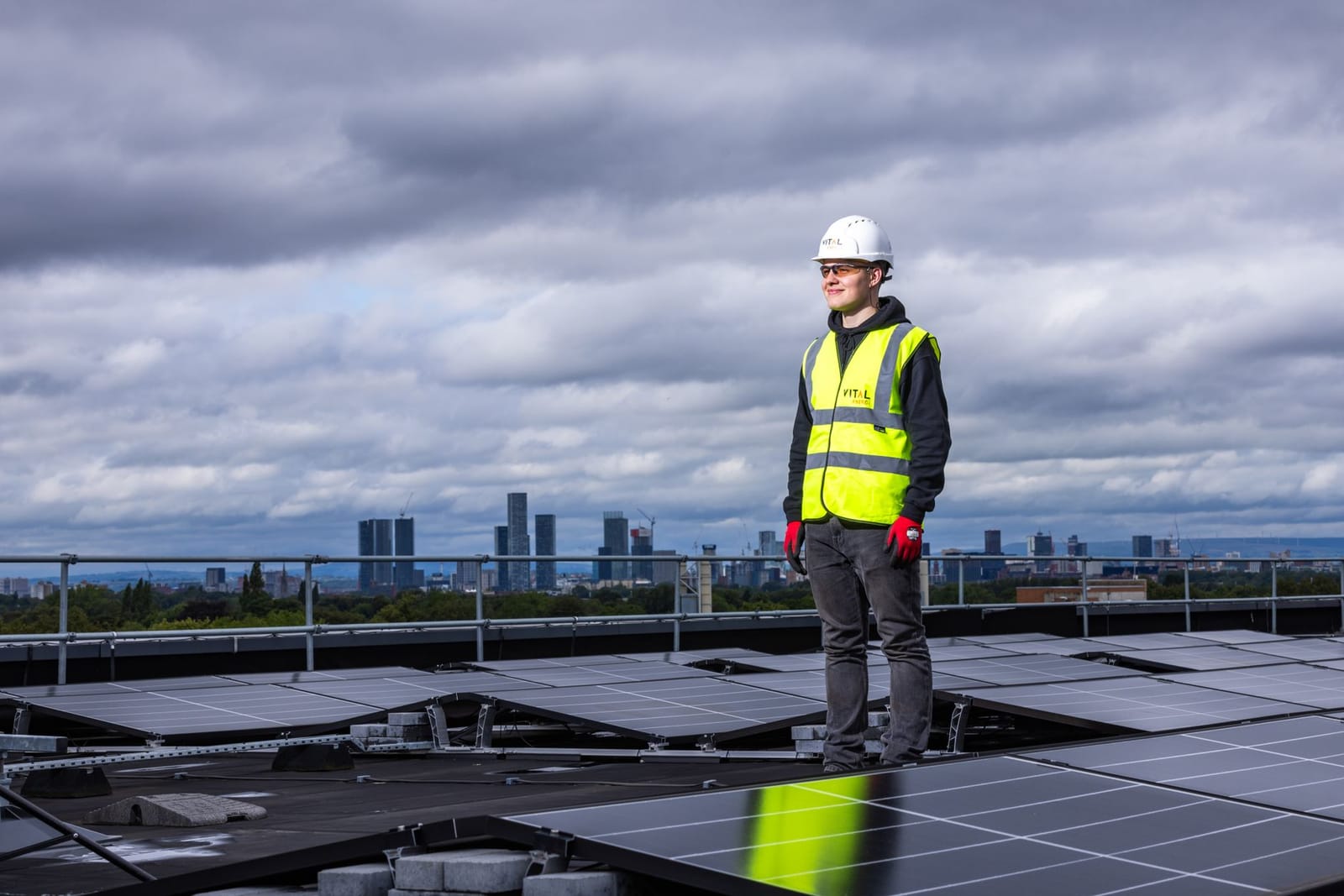
Once a business accepts that solar pays back, the decision quickly narrows to a single fork: do you own the system or does a funder own it. For the lease half of that fork, with a worked example and the tax and accounting rules, read lease vs buy solar panels. Owning it, whether from cash, a loan or hire purchase, keeps every pound of saving, the export income and the tax relief, but it either ties up capital or adds debt. Letting a funder own it, through a lease or a Power Purchase Agreement, removes the capital barrier entirely but hands those benefits to the funder in exchange. Neither is universally right. The right answer depends on your cash position, your tax profile and how long you will hold the building. This guide lays out each route honestly, then gives you a decision framework you can work through with your co-director or accountant.
The three routes, in plain terms
Buying outright, or on finance
When you buy the system, whether you pay cash, borrow through a business or green loan, or spread it on hire purchase, you own the asset. That ownership is what drives the strongest lifetime return, because there is no funder margin skimming the saving and every unit the system generates is worth its full value to you for twenty-five years or more.
Ownership also unlocks the tax relief. As the owner for tax purposes, you can claim the Annual Investment Allowance, which gives 100 per cent first-year relief on qualifying plant up to £1m and covers most business installs. Under hire purchase you claim it as the owner, which is one of the main reasons owners choose HP over a lease, although roof-mounted panels are usually fixtures, so agree with your accountant when the claim falls. You also keep the Smart Export Guarantee income on any power you send back to the grid.
The trade-off is the money. Buying outright uses working capital you could put into stock, hiring or growth, so the real question is whether the return on solar beats the return on the next best use of that cash. Financing softens the cash hit but adds interest and a matching liability on your balance sheet.
Leasing
An operating lease is a rental. You pay a fixed monthly amount to use the system, the lessor keeps ownership, and at the end you hand it back or extend. The rentals are treated as an ordinary business expense and come off your profit before tax, which gives a clean, predictable monthly cost.
The catch is that you never own the asset, so you never reach the point where the finance clears and the power becomes effectively free. The lessor keeps the capital allowances, not you. And the historic appeal of leasing, keeping the asset off your balance sheet, can no longer be assumed: accounting rules have tightened and most leases now sit on the balance sheet, so if off-sheet treatment is your reason for leasing, confirm the current position (see solar panel leasing for business) with your accountant before relying on it.
A Power Purchase Agreement
Under a PPA a third party funds, installs, insures and maintains the system on your roof at no cost to you, and you sign a long agreement, usually 10 to 25 years, to buy the electricity it produces at an agreed rate per unit. That rate normally sits well below your grid price, so your energy bill falls from day one with nothing spent up front and no maintenance to worry about.
Because the funder owns the kit, they receive the tax relief and any export income, and you are tied into a long contract. The PPA gives the lowest day-one cost of any route but the lowest lifetime return, because the funder’s margin comes out of what would otherwise be your saving. The discount on the unit rate and the exit and buy-out terms therefore matter far more than the headline “no upfront cost” line.
Where the money really differs
It helps to see the routes on the same measures rather than as separate stories.
| Measure | Buy (cash or finance) | Operating lease | PPA |
|---|---|---|---|
| Upfront cost | Full, or a deposit on finance | £0 to low | £0 |
| Who owns the system | You | The lessor | The funder |
| Who claims tax relief | You | The lessor | The funder |
| Who keeps export income | You | The lessor | The funder |
| Balance sheet | On, as an owned asset (plus any loan) | Usually on now, confirm | Intended off, confirm |
| Lifetime return | Highest | Lower | Lowest |
| Day-one cost | Highest | Low | Lowest |
| Maintenance risk | Yours | Lessor’s | Funder’s |
| Best for | Maximum return, cash available | Smooth P&L cost, no ownership wanted | Cheaper power now, no capital |
The pattern is consistent: the more you pay up front and the more you own, the higher your lifetime return; the less you commit, the more of that return you hand to a funder in exchange for removing the capital barrier and the maintenance risk. There is no free lunch, only a trade you choose deliberately.
A decision framework
Rather than starting from the products, start from your own position. Work through these four questions in order and the route usually reveals itself.
1. Can you commit or borrow the capital? If you have surplus reserves earning little, or you can borrow at a sensible rate, ownership is on the table and it gives the best return. If capital is genuinely unavailable and borrowing is not an option, you are effectively choosing between a PPA and a lease, and the question becomes which zero-capital structure suits you. A third zero-capital structure, a service contract covering the kit, its upkeep and its performance, is explained in energy as a service for business.
2. How long will you hold the building? Solar is a long-life asset that rewards a long stay. If you own or hold a long lease on the building for the next fifteen-plus years, both owning and a PPA make sense. If you might move or sell within a few years, a long PPA contract can become an encumbrance a buyer has to accept, so ownership on a shorter finance term, or waiting, may be wiser. Always read the PPA’s assignment and buy-out terms before signing to a decade or more.
3. What is your tax position? A profitable company that can use the AIA in full gets a strong first-year deduction from an ownership route, roughly 25p per £1 spent at a 25 per cent tax rate, which materially improves the case for buying or financing. A business with little taxable profit gains less from the allowances, which narrows the advantage ownership holds over a PPA.
4. Do you want to run the asset, or hand off the risk? Ownership means you carry the maintenance and performance responsibility, though warranties and monitoring make that light in practice. A PPA or lease hands that risk to the funder. If having one less thing to manage genuinely matters to you, that is a legitimate reason to lean towards a funder-owned route even at a lower return.
If you answered “yes, long, profitable, happy to run it” you are a strong candidate for buying outright or on finance. If you answered “no capital, long stay, modest profit, prefer to offload risk” a PPA is a sensible fit. Anything in between usually points to the middle path: hire purchase or a green loan, which lets you own the asset and claim the relief while still paying monthly.
The middle path most owners land on
For a large share of businesses, the answer is not a pure buy or a pure PPA but finance that owns the asset. Hire purchase and green loans let you keep the ownership, the tax relief and the export income while spreading the cash over the term, and in a well-structured deal the energy saving covers the payment so the project self-funds.
The representative case bears this out. An owner-managed engineering firm fitting a 48 kWp array chose a seven-year green business loan rather than buying outright, because it did not want to tie up cash needed for tooling. It owned the system from day one, claimed the roughly £12,000 of year-one AIA relief, and still ran a little over £2,500 a year cash-positive after loan repayments. Once the loan clears, the full saving flows to the bottom line for another fifteen-plus years. These are representative, indicative 2026 figures, not a named client, but they show why the middle path is so often the pragmatic winner.
Model it before you decide
The single most useful thing you can do is put your own numbers against each route. The finance calculator shows the projected monthly cost of each option next to your projected monthly saving, so you can see which routes come out cash-positive on your actual bill. Pair that with the payback and ROI figures for a system your size and the cost page for typical prices, and you will have real numbers to take to your accountant.
If your instinct is to own but you want to weigh specific lenders against each other first, our sibling resource covers how to compare finance providers side by side. When you have made the ownership decision and want firm figures for your building, send us your numbers and we reply by email.
The honest verdict
There is no single best answer, and any resource that gives you one without asking about your cash, your tax and your building is selling, not advising. Buying returns the most and costs the most up front. A PPA costs the least up front and returns the least over time. Finance sits between them and suits most owners who want ownership without the cash hit. Decide from your own position, model it against your own bill, and take clear numbers into the conversation rather than a headline promise.
Related guides
Ready to move from theory to real numbers?
Free to use, no obligation
- 1. Tell us about the building, its electricity spend and how you would like to fund it.
- 2. We reply by email with the funding routes worth comparing for your building.
- 3. You decide. There is no obligation, and the routes compared on this site help you check any quote.
- Every route compared
- No upfront options
- No obligation
- Free to use