What do lenders and funders check before financing business solar?
Published 28 September 2026 · SEO Dons Editorial
Editorial standards: figures are cross-checked against gov.uk capital-allowances guidance and Ofgem Smart Export Guarantee rates, and updated as rules change. We are independent, so no funder relationship influences these comparisons. General information, not financial or tax advice, confirm your position with your accountant.
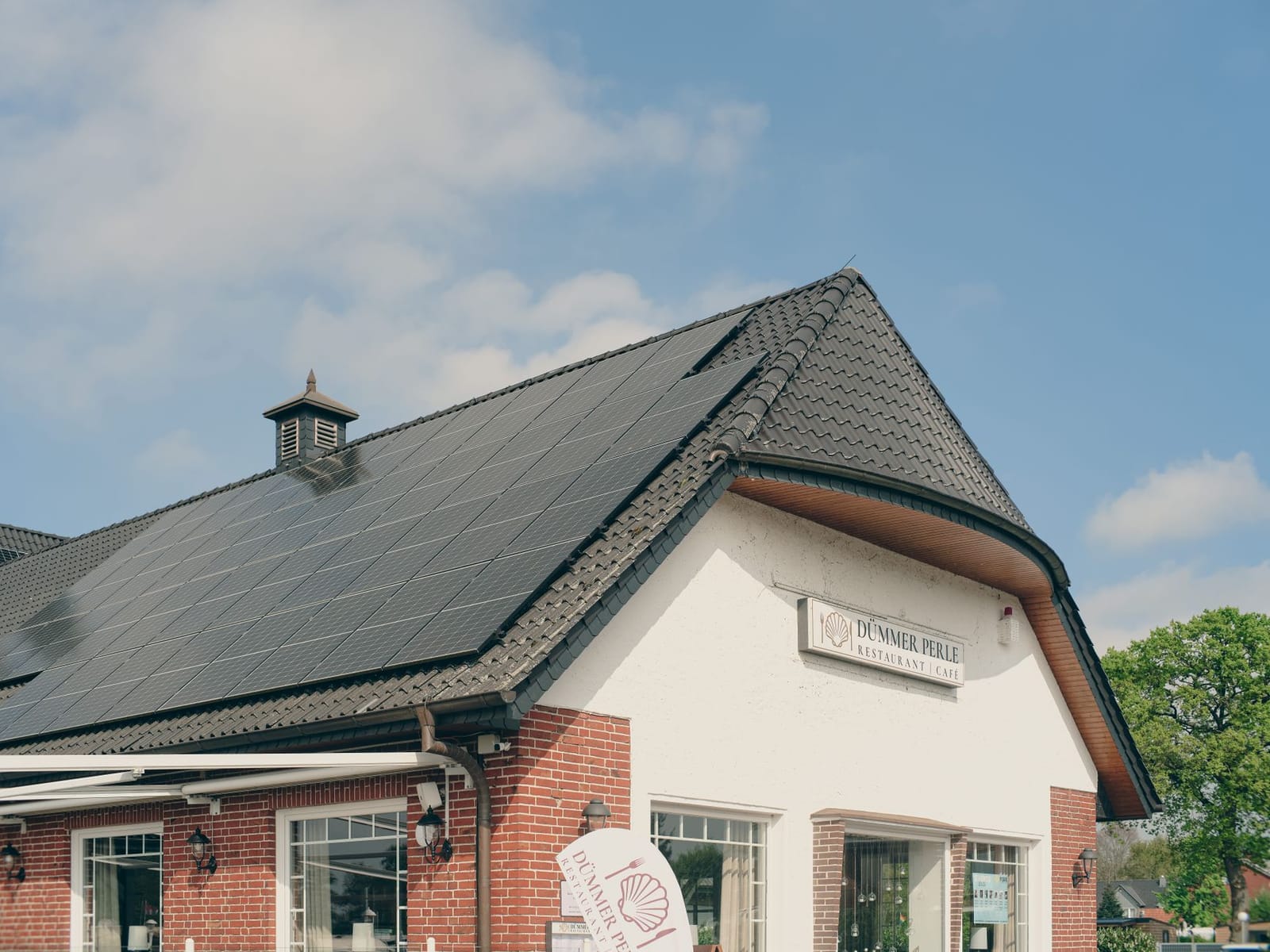
A lender looking at a solar project asks the question it asks of any loan, will this be repaid, but answers it twice. Once for the business, from its accounts and credit history. Once for the project, because the repayments are meant to come out of the energy savings and the kit sits on a roof, not in a yard. This guide sets out what gets checked, drawn from British Business Bank, Ofgem and energy network guidance, so your application answers the questions before they are asked. For the funding routes themselves, see the guide to renewable energy finance.
1. The business: track record, accounts and credit
The British Business Bank's guidance is plain: for most debt finance, "lenders usually want to see a track record as part of their credit assessment criteria". A lender will review your credit report, and your business credit score "will have a direct impact" on whether the application is approved. Depending on your situation it may also want your most recent financial statements, including a profit and loss statement and a balance sheet; if it has been more than two years since you last filed accounts, it may request new filings.
Much of this is public. Companies House lets anyone view company details, officers, filed documents, mortgage charge data and insolvency information free of charge, so existing charges over your assets will be seen whether or not you mention them. The British Business Bank warns that filing late "can make it difficult for a company to access finance". If you use cash-basis accounting, gov.uk notes that a bank could ask to see accounts drawn up on the traditional basis before agreeing a loan.
2. Affordability: can the business carry the repayments?
You need to "demonstrate your financial capacity to repay the borrowed amount". For solar, it helps to show two things side by side: that today's cash flow can meet the repayments, and that the savings case holds up on its own terms. A credible savings case sets out expected generation, how much will be used on site rather than exported, and the tariffs assumed, not just a headline payback figure.
Be conservative on export income. Ofgem says the amount and contract length of Smart Export Guarantee payments are set by your chosen supplier, and the only floor is that a tariff "must always remain above zero". Run the numbers through the finance calculator before a lender does.
3. The asset: certification and a clear quote
Certification matters to a funder partly because it decides whether export income is available at all. Under Ofgem's Smart Export Guarantee guidance, solar PV installations up to 50 kW must show that both the installation and the installer are suitably certified, which may be an MCS certificate or an equivalent scheme. Above 50 kW and up to 5 MW, the installation still needs certification, but each licensee has discretion over what it accepts. If you cannot show certification, a licensee "is not obliged" to pay you under the scheme. Check the installer is certified for solar PV specifically, and expect a funder to ask for the full quote: equipment, installed cost, programme and warranties. More on Smart Export Guarantee payments.
4. The grid connection
The size of the system decides how involved the network operator is. The Energy Networks Association's split is simple: EREC G98 covers generators "up to and including 16 A per phase", which is 3.68 kW per phase, and anything larger falls under EREC G99. Under G98 the installer notifies the network operator within 28 days of commissioning. Under G99 you apply first, and "once you have accepted the DNO's connection offer, construction can begin". Offers are time-limited, and some connections need network reinforcement, with extra cost and waiting time. Expect a lender to ask which route applies and, for G99, where the application stands: without an accepted offer, the project cannot promise a start date.
5. The building: tenure, consent and the roof
This is where solar differs from most asset finance. HMRC's manual states that "in law, a fixture belongs to the freeholder of the land", and lists solar panels among the items normally treated as fixtures. Panels bolted to a roof are awkward security compared with a vehicle, so expect detailed questions about the building:
- Who owns it: freehold, lease, or occupation by a connected company with nothing in writing.
- How long is left on the lease compared with the finance term, and whether there is a break clause.
- Landlord consent: where a lease allows improvements only with consent, section 19(2) of the Landlord and Tenant Act 1927 says that consent is not to be unreasonably withheld (England and Wales). A lease that bans alterations outright is a different matter. Either way, get the consent in writing before a lender asks.
- The roof itself: its condition, remaining life and ability to take the load. Replacing a roof after the panels are on means paying to take them off and put them back.
Who holds the lease also decides who claims the tax relief; see who claims capital allowances on a rented building.
6. Security, guarantees and insurance
How a lender protects itself depends on the product. The British Business Bank's guidance covers the main patterns:
- A personal guarantee "is usually required for unsecured business loans". Some lenders ask for a guarantee of the full amount, others for as little as 20%, and many financial institutions require you to take legal advice before signing.
- Secured loans usually use property as security, and unsecured loans typically carry higher interest rates.
- With asset finance the asset itself is the security, so there is no need to put up additional assets; under a finance lease, the lessee is responsible for insuring and maintaining it.
If the lender uses the government-backed Growth Guarantee Scheme, the scheme generally supports facilities of up to £2 million with a 70% guarantee to the lender, not to you: "the borrower always remains 100% liable". Personal guarantees are at the lender's discretion, but a principal private residence cannot be taken as security, and lenders still run their standard credit and fraud checks. Term loans and asset finance currently run from three months to six years; terms of up to ten years were announced in July 2026 and are being introduced through lenders.
7. When the funder owns the kit: PPAs and leases
Under a power purchase agreement, the provider pays for the system and is repaid through the electricity you buy from it over the contract. The credit question turns around: the provider is relying on your business to keep buying power for the whole term, so it will look hard at your accounts and at whether your right to occupy the site lasts as long as the contract. Expect questions on lease length, break clauses, what happens if you sell or move, and access to the roof for maintenance. An operating lease raises similar questions, because the funder's equipment is fixed to a building it does not control.
What to have ready
Adapted from the British Business Bank's list of documents lenders may ask for:
- Business bank statements, filed accounts, business tax returns and, for smaller firms, the owners' personal tax returns
- A balance sheet and financial forecasts that include the new repayments
- Details of existing finance: leases, loans and credit lines
- The installer's quote, specification, certification and generation estimate
- The grid route: G98, or the G99 application and connection offer
- Your lease or title, and the landlord's written consent where needed
- ID and proof of address for the owners
If the answer is no
A refusal from one lender is not the end. Under the Bank Referral Scheme, launched in November 2016, a participating bank that turns down a smaller business must offer a referral to a designated finance platform; the scheme covers businesses with turnover under £25m. Ask why you were declined, fix what can be fixed, such as late filings, missing consents or an unaccepted grid offer, and compare the alternatives on the finance options compared page. When the pack is ready, you can request a costed quote.
Questions business owners ask
What do lenders look at first on a business solar application?
Your business: its track record, filed accounts and credit report. The British Business Bank says lenders usually want to see a track record as part of their credit assessment, and a lender will review your credit report before deciding. Filed documents, charges and insolvency information are free to view at Companies House, so late or missing accounts will be seen.
Do lenders need the solar system to be MCS certified?
Each lender sets its own conditions, but certification matters because it decides whether you can be paid for exported electricity. For solar PV up to 50 kW, Ofgem's SEG guidance requires the installation and installer to be suitably certified, through MCS or an equivalent scheme. Above 50 kW, the installation still needs certification and the licensee decides what it accepts.
Why do lenders ask about the grid connection?
Because a system that cannot connect cannot produce the savings that repay the loan. Under the Energy Networks Association's rules, G98 covers generation up to 16 A per phase and the installer notifies the network operator within 28 days of commissioning. Anything larger needs a G99 application, and construction can begin only once you have accepted the operator's connection offer, which is time-limited.
Will I need to give a personal guarantee for solar finance?
Possibly, especially for unsecured lending. The British Business Bank says a personal guarantee is usually required for unsecured business loans, and some lenders ask for the full amount while others ask for as little as 20%. Under the Growth Guarantee Scheme, guarantees are at the lender's discretion, but a principal private residence cannot be taken as security.
Can a tenant get finance for solar on a rented building?
Yes, but expect more questions about the building. Panels fixed to a roof are normally fixtures, which in law belong to the freeholder, so funders look at how long is left on your lease, any break clause, the landlord's written consent and the roof's condition. In England and Wales, where a lease allows improvements only with consent, that consent cannot be unreasonably withheld.
What does a PPA provider check before funding a system?
Mainly your ability to keep buying power for the whole contract, and your right to stay on the site. Under a power purchase agreement the provider pays for the system and is repaid through the electricity you buy, so it looks at your accounts and credit, your lease length and break clauses, and access to the roof for maintenance.
Related guides
Ready to move from theory to real numbers?
Free to use, no obligation
- 1. Tell us about the building, its electricity spend and how you would like to fund it.
- 2. We reply by email with the funding routes worth comparing for your building.
- 3. You decide. There is no obligation, and the routes compared on this site help you check any quote.
- Every route compared
- No upfront options
- No obligation
- Free to use