Worked example: a cold store takes 250 kWp on a zero-upfront PPA
Illustrative scenario · assumed location: Peterborough, Cambridgeshire
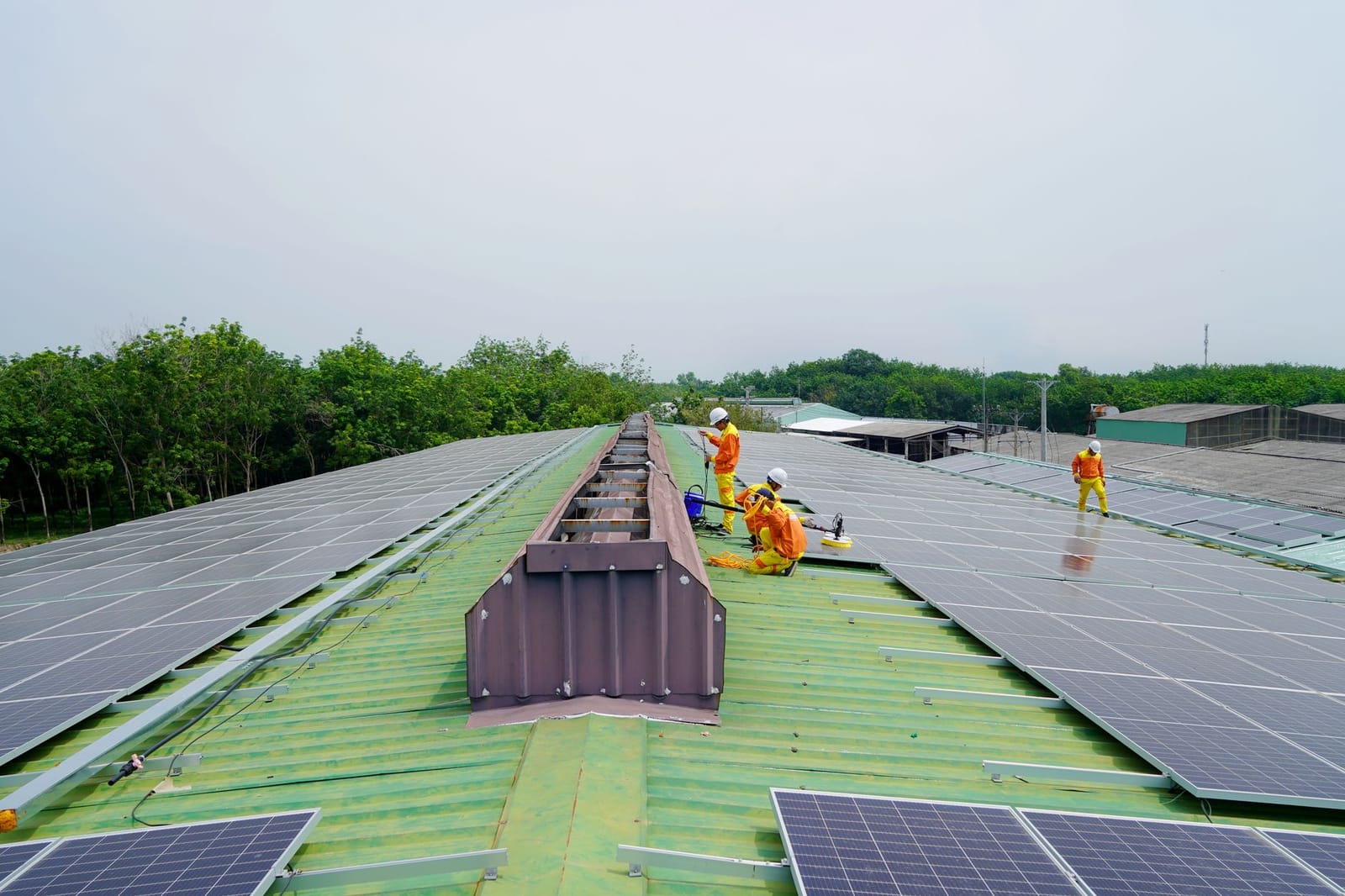
In this scenario a cold-storage and food operator running refrigeration around the clock, with a large flat roof and one of the highest electricity bills on its industrial estate, wants cheaper power immediately but will not commit capital while it is investing in new chillers and racking. It takes a 250 kWp system on a zero-upfront Power Purchase Agreement, buying the electricity the roof produces at a rate well below the grid. The operator is hypothetical, and the prices and volumes are modelled assumptions rather than the terms of a real contract.
The funding structure
Under the PPA a third-party funder pays for, owns, insures and maintains the system on the operator’s roof at no capital cost to the operator. The business enters a long-term agreement to buy the electricity the array generates at an agreed price per unit, set well under its grid import rate. Because the funder owns the asset, the funder, not the operator, keeps the capital allowances and the export income. In return the operator carries no maintenance or performance risk and spends nothing up front.
There is no installed cost on the operator’s books here and no monthly finance payment in the usual sense. Instead there is a unit rate: against an assumed grid price of 28p a unit, the model uses an assumed PPA rate of about 20p a unit for the power consumed on site. A contract may fix that rate or let it change over time, so the business should check how the rate is set and reviewed before committing, because the saving depends on the gap between the two prices.
The numbers
The model assumes the system generates around 237,500 kWh a year. With refrigeration providing a heavy, steady daytime and shoulder load, the scenario sets self-consumption high at about 80%, so roughly 190,000 kWh is used on site each year. Every one of those units bought at the 20p PPA rate rather than the 28p grid rate saves about 8p, which across 190,000 kWh is a saving of around £15,200 a year on power the operator would otherwise import.
The roughly 47,500 kWh the site does not use is exported, but under a PPA that export income belongs to the funder, not the operator, so it does not add to the operator’s saving. The gross saving in this model is therefore about £15,200 a year, and it arrives from the first month with nothing spent and nothing borrowed. The saving is simply the gap between the grid price and the PPA rate multiplied by the units used on site, so it widens if grid prices rise faster than the PPA rate and narrows if the PPA rate catches up.
Because the operator invests no capital, a payback period does not really apply here. The value is a lower, more predictable energy cost from day one, with the funder carrying the asset, the maintenance and the performance risk.
Why this route suits this scenario
A PPA gives the lowest lifetime return of any route, because the funder’s margin comes out of the saving and the operator never owns the asset or the tax relief. It is the right choice when a business cannot or will not commit capital, wants no maintenance responsibility, and expects to stay in the building long enough to benefit from a long contract. All three hold in this scenario. Cash is earmarked for cold-chain equipment, refrigeration makes maintenance risk something the operator is glad to hand off, and the site is a long-term home. The trade-off, a lower lifetime return in exchange for zero capital and immediate savings, is one to make with eyes open, and a business weighing it should read the buy-out and early-exit terms carefully before signing.
Model this against your own electricity spend in the finance calculator, then get costed quotes when you are ready.
Want figures for your own building? Model it in the finance calculator, see which reliefs apply on the grants & funding hub, then get costed quotes.