Worked example: a mixed farm buys 80 kWp outright with AIA relief
Illustrative scenario · assumed location: Boston, Lincolnshire
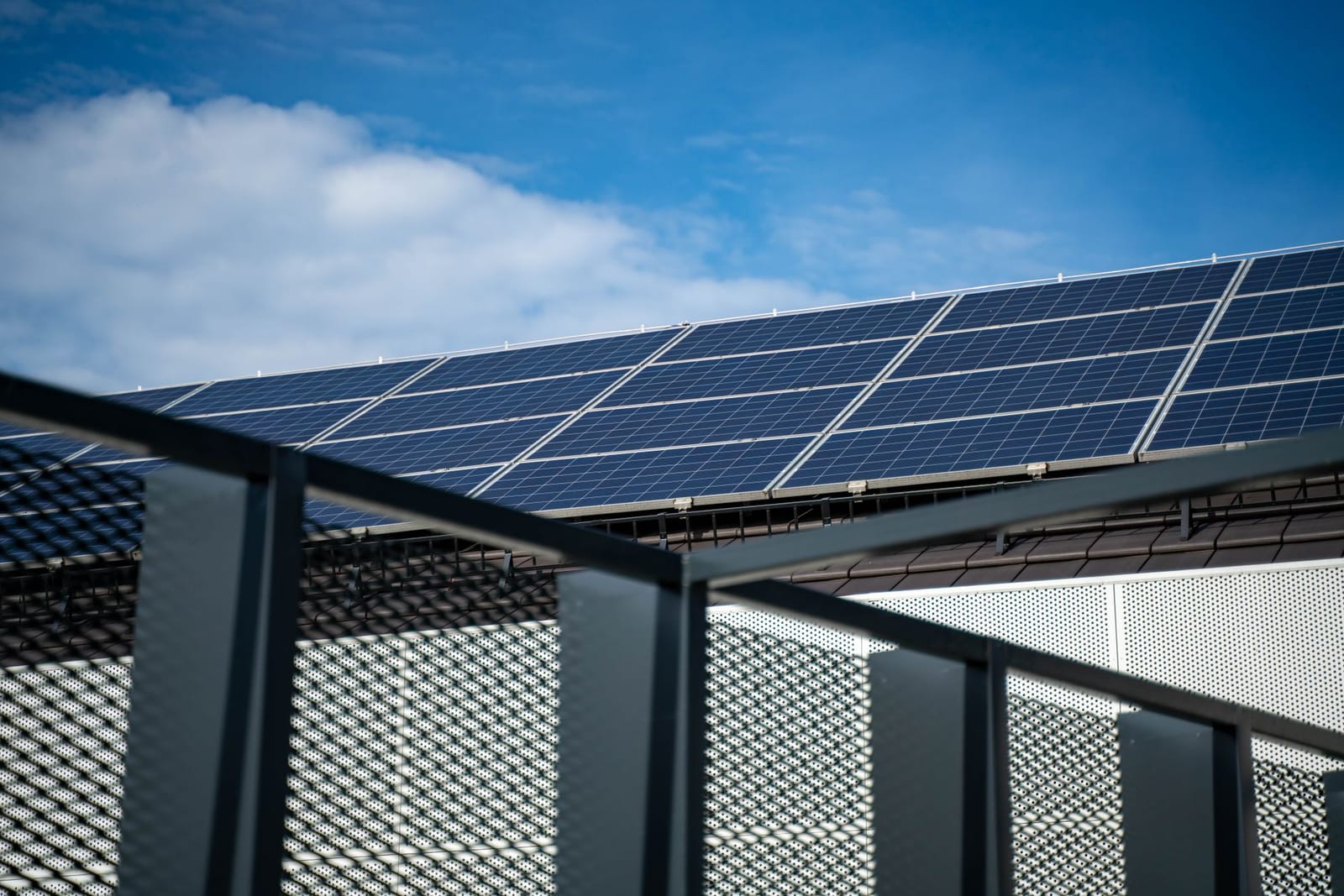
In this scenario a mixed-farming business with grain drying, cold storage for produce, workshop equipment and a farmhouse-office load wants to cut a heavy and rising electricity bill, particularly through the drying season. It has large barn roofs, a strong daytime demand and cash available after a good harvest, so it buys an 80 kWp system outright and claims the year-one capital allowance, while looking honestly at whether any grant could help. The farm is hypothetical and every figure below is a modelled assumption, set out to explain the method rather than to report a result.
The funding structure
The farm pays the full installed cost from its own funds and owns the system from commissioning. As a VAT-registered business it reclaims the 20% input VAT through its normal return. Buying outright means no lender, no interest and no term, and the farm keeps every pound of saving, all the export income and the entire capital allowance.
The model uses an assumed installed cost of about £850 per kWp, an indicative 2026 figure, which puts the 80 kWp system at roughly £68,000 before VAT. That sum sits well under the £1m Annual Investment Allowance cap, so the whole qualifying spend attracts 100% first-year relief. With no borrowing involved there is no finance rate to assume, and the real test is whether the return on that cash beats the farm’s next best use for it.
The numbers
The model places the farm in Lincolnshire, where the solar resource is good, and assumes the system generates around 76,000 kWh a year. With grain drying, refrigeration and workshop use concentrated in daylight and through the harvest peak, the scenario sets self-consumption at about 74%, so roughly 56,200 kWh is used on site. Those units displace grid power at an assumed grid price of 28p a unit, worth about £15,740 a year. The remaining 19,800 kWh is exported at an assumed export rate of 8p (Smart Export Guarantee tariffs vary by supplier), adding about £1,584. Together that is a gross annual benefit of about £17,300 in the model.
On tax, the farm claims the full AIA on the qualifying cost. The model assumes the business pays corporation tax at 25%, so the allowance is worth roughly £17,000 against its year-one tax bill, cutting the net cost to about £51,000 once the allowance and the VAT reclaim are counted. A farm taxed on a different basis would see a different figure, which is worth checking with an accountant before relying on it. Divide that net cost of about £51,000 by the gross benefit of about £17,300 a year and the simple payback comes to about 2.9 years, or about 3.9 years measured against the full pre-relief price of £68,000. After that the system keeps generating for two decades more, with no finance cost attached and every unit it produces adding to the farm’s margin.
Why the Farming Investment Fund is only a footnote here
Farm businesses often ask about the Farming Investment Fund, which in earlier rounds funded solar where it was integrated with productive farming, for example powering grain drying or refrigeration. Honesty matters here: on gov.uk the round that funded rooftop solar PV, the Improving Farm Productivity grant, is shown as closed to applications (the Farming Equipment and Technology Fund is a separate small-equipment fund, not a solar capital grant), a new Capital Grants offer was scheduled to open in July 2026 but its solar-PV eligibility was not confirmed at the point of writing, and the fund is farm-business-only and England-only. So in this scenario the farm does not build its decision around a grant it might not get. It treats any future award as a bonus to check for when a window actually opens, not as part of the sums, and funds the system on the reliefs that are certain: the AIA and the VAT reclaim.
Why this route suits this scenario
Buying outright suits a business with spare cash, a settled site and a tax bill big enough to use the year-one allowance in full, and a farm coming off a strong harvest often fits all three. Ownership gives the farm in this scenario the maximum lifetime return with no lender margin eating into it, on an asset that can outlast most of the machinery it powers. Sizing the array to the drying and refrigeration load, rather than to the area of available roof, keeps self-consumption high, which is where the economics really come from. For an owner who can spare the capital and wants the biggest long-run return, outright purchase is the clear choice in this model, with any grant treated as a possible extra rather than a plan.
Model this against your own electricity spend in the finance calculator, then get costed quotes when you are ready.
Want figures for your own building? Model it in the finance calculator, see which reliefs apply on the grants & funding hub, then get costed quotes.