How to Apply for Business Solar Grants (2026)
Updated 12 June 2026 · Business Solar Finance
Editorial standards: figures are cross-checked against gov.uk capital-allowances guidance and Ofgem Smart Export Guarantee rates, and updated as rules change. We are independent, so no funder relationship influences these comparisons. General information, not financial or tax advice, confirm your position with your accountant.
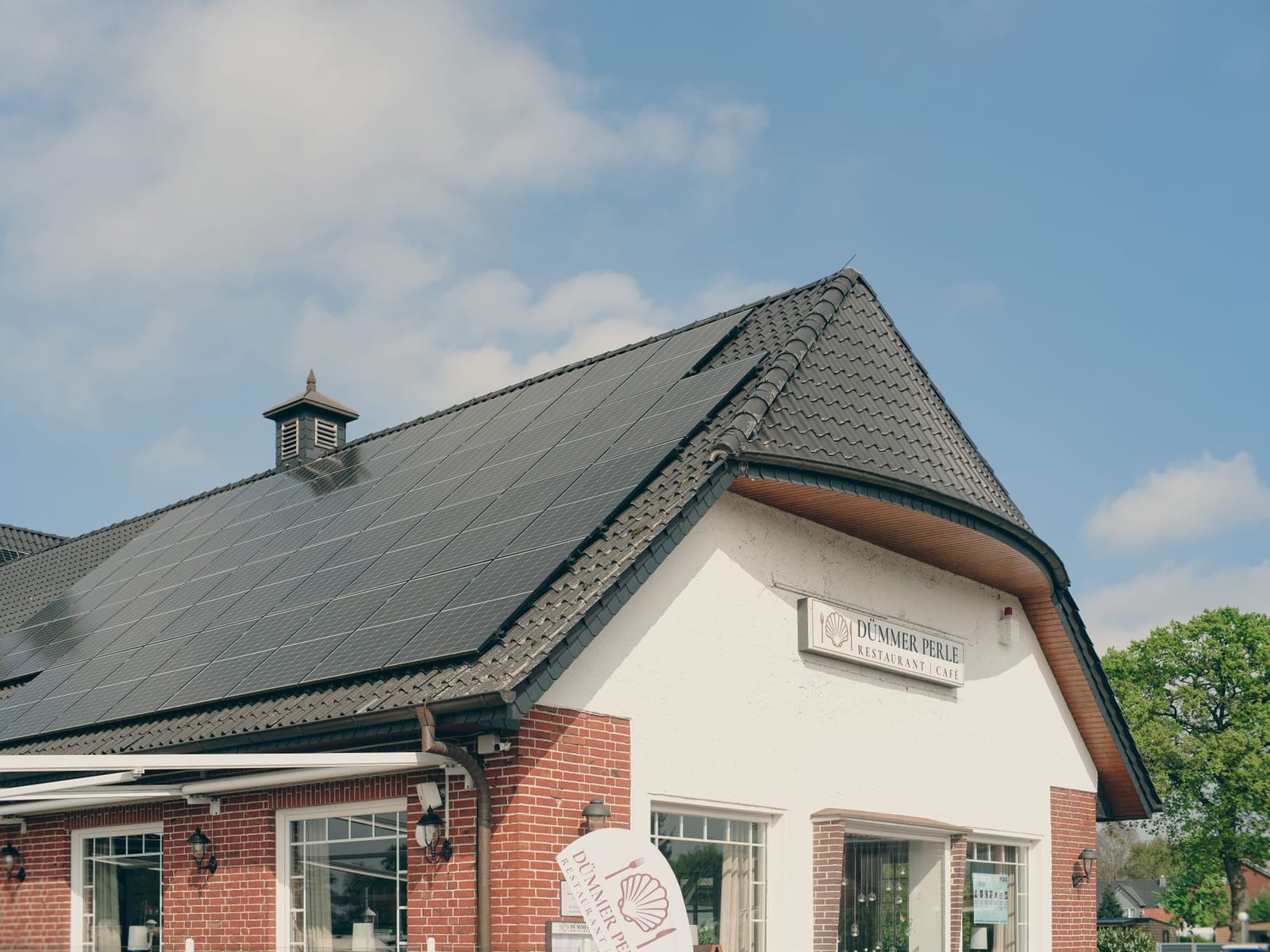
Search “how to apply for business solar grants” and you will find pages implying there is a single form to fill in and a cheque at the end of it. For a private UK business in 2026, that is not how it works. Most of the money in a commercial solar project comes from tax relief you claim through your normal returns, not from a grant you apply for, and several of the headline schemes you have read about do not fund private business at all.
This guide walks through the process in the right order: what to check first, how to claim the reliefs that are the real money, how to register for the one ongoing incentive, and where the genuine grants are hiding. It is written for owners, directors and finance controllers who want the honest version before they take numbers to their accountant.
This is general information, not tax or financial advice. Scheme eligibility, rates and deadlines change, so confirm the current position for your business and region before you rely on it.
Step 1: Work out what actually applies before you apply for anything
The single biggest mistake is applying blind. Before you touch a form, work out which routes your business can realistically use, because half the schemes advertised as “solar grants” are public-sector or domestic only, and applying to them wastes weeks you will not get back.
Start with our funding finder. It filters the routes by what you are: a company or a sole trader, VAT-registered or not, based in England or a devolved nation, an office or a heavy-energy industrial site. That single filter step tells you which of the reliefs, incentives and grants below are even worth reading in detail, so you are not chasing money you can never receive.
The honest headline is this. For most businesses there is no capital grant that pays a slice of the installation cost. What there is: tax reliefs that are worth far more than most grants, one ongoing export incentive, and a patchwork of intermittent regional schemes you have to hunt for locally. Get the order right and you claim everything you are entitled to without waiting on funding that was never coming.
Step 2: Claim the tax reliefs, because that is the real money
The largest financial lever on a commercial solar project is not a grant. It is capital allowances, and unlike a grant it is not first-come-first-served, not region-restricted, and needs no separate application.
Solar PV is classed as special-rate plant by HMRC (manual reference CA22335), and that single fact drives the whole tax position. For most installs the Annual Investment Allowance gives 100% first-year tax relief on qualifying capital spend up to £1m a year, and solar qualifies up to that cap. Because the great majority of business installs cost well under £1m, that usually means you deduct the full system cost from your taxable profits in year one. At a 25% corporation tax rate that is worth roughly 25p back for every £1 spent, delivered as a lower tax bill. On a £48,000 system, the year-one allowance is worth in the region of £12,000 of relief. No regional solar grant is going to hand a private business that.
Here is how you actually claim it.
Claim the AIA through your normal tax return. There is no pre-approval and no application portal. A company claims it on the Company Tax Return, the CT600. A sole trader or partnership claims it through Self Assessment. You claim it in the accounting period in which the expenditure is incurred, which broadly means when you become unconditionally obliged to pay.
Keep the panels-versus-electrical invoice split. Ask your installer for an invoice that separates the solar panels themselves from the other qualifying plant, such as the electrical and wiring system. This matters because the panels are special-rate while other plant may be treated differently, and the split is exactly what lets your accountant place each element in the right pool if your spend runs above the cap.
Coordinate the 50% first-year allowance above £1m. If your total qualifying capital spend in the year exceeds the £1m AIA ceiling, the excess attributable to solar panels can attract the 50% special-rate first-year allowance, with the remaining balance written down at 6% a year in the special-rate pool. This one is companies only, so sole traders and partnerships rely on the AIA. Have your accountant confirm the £1m cap is not already used by other capital spend in the same period, and remember the cap is shared across a group of companies.
Do not plan around “100% full expensing”. This is the most mis-sold point in the market. Solar does not qualify for 100% full expensing, and it does not get the new 40% first-year allowance introduced from January 2026 either. Both of those are for main-rate plant, and solar is special-rate. Anyone promising “100% full expensing on solar” is quoting the wrong rule and will overstate your first-year relief. Plan around the AIA. The full detail sits in our capital allowances explained guide.
Reclaim the VAT if you are VAT-registered. Commercial solar is standard-rated at 20% VAT. The 0% rate you see advertised is for homes and charitable buildings and does not apply to business premises. A VAT-registered business reclaims that 20% as input tax on its normal VAT return, provided the system is for business use and you hold a valid VAT invoice. On a £100,000 plus VAT install, that is £20,000 reclaimed, so for most firms it is a cash-flow timing item rather than a real cost. If your business makes exempt supplies you may be partly exempt and unable to reclaim all of it, so take advice.
One more that behaves like a saving without any form to fill in: in England, qualifying rooftop solar for self-consumption is 100% exempt from business rates from 1 April 2022 to 31 March 2035, applied automatically by the Valuation Office Agency. You do not apply for it, but if you think your installation has been wrongly added to your rateable value, contact the VOA. Scotland and Wales run their own equivalent regimes.
Step 3: Register for the Smart Export Guarantee and choose a tariff
The Smart Export Guarantee, or SEG, is the one ongoing incentive that genuinely applies to private business. It replaced the Feed-in Tariff, which closed to new applicants, and it pays you per unit for the surplus electricity your system exports to the grid. Systems up to 5 MW qualify, so effectively every business rooftop and most ground-mount projects are eligible.
Applying is a real process, unlike the tax reliefs. Here is the sequence.
- Install eligible generation with the right certification: MCS certification for systems up to 50 kW, or equivalent quality assurance above 50 kW.
- Make sure you have a meter that can provide half-hourly export readings, which usually means a smart meter with export capability.
- Compare SEG tariffs from the licensed suppliers. Every large supplier must offer at least one export tariff, and the rate must always be above zero, but suppliers set their own rates so they vary widely. You can choose a different supplier for export than the one you buy import power from.
- Apply directly to your chosen SEG licensee, providing your MCS or installation certificate, meter details including the MPAN, and proof of ownership.
- Submit or allow automatic export readings, and the supplier pays you per unit exported.
Keep SEG in proportion. The best fixed business export tariffs in 2026 pay about 15p per unit (EDF's small-business tariff, for its own electricity customers), while many standard tariffs pay far less, around 3p to 8p. More importantly, a unit you use on site displaces grid import worth roughly 26 to 32p, roughly double or more what an exported unit earns. So a well-designed business system is sized to your daytime load, not to maximise export, and SEG income is a top-up rather than the heart of the return. For a business, that export income is taxable trading income, so declare it. You can see how self-consumption and export feed the return on our payback and ROI page.
Step 4: Check your Growth Hub and regional schemes
This is the most genuinely accessible grant route for a private SME, and also the most frustrating, because there is no single national solar grant. Instead there is a shifting patchwork of intermittent, region-specific pots you have to find locally.
Where a round is live, these are usually small capital contributions, commonly a few thousand up to low tens of thousands of pounds, often as a percentage match, and sometimes only covering audits or efficiency measures rather than solar itself. Funding feeds through the UK Shared Prosperity Fund and, from 1 April 2026, the new £1.5bn Local Growth Fund, though that is restricted to 11 Mayoral Strategic Authority areas, mostly in the North and Midlands, so most of the country is not covered by it.
To find what is live for you:
- Find your local Growth Hub. Search “Growth Hub” plus your county or city. Every area of England has one, and they signpost and sometimes administer these grants.
- Search the official gov.uk Find a Grant service at find-government-grants.service.gov.uk for currently-open schemes.
- Check your combined or mayoral authority and local council websites, especially if you are in one of the 11 Local Growth Fund areas.
- Register your interest early, because these windows are small and often close within weeks of opening.
Treat any headline “grants available” claim with scepticism until you have confirmed a live scheme in your own area. The honest planning advice is to build your business case on the tax reliefs you can count on, and treat a regional grant as a bonus that improves an already sound project, not the thing that makes it viable.
If your business is in a devolved nation, you have options England does not. Scotland's Business Energy Scotland SME loan is interest-free (£1,000 to £130,000 over eight years), but it is not accepting new applications for solar PV projects at the time of writing; it still funds efficiency measures, heat pumps and solar thermal. Wales runs the Development Bank of Wales Green Business Loan Scheme, which lists solar PV as eligible and requires two years of trading, plus an energy-audit grant. Northern Ireland has the Invest NI Energy Efficiency Capital Grant and NISEP support that can include solar. These are strictly limited to businesses physically based in those nations. Our grants and funding hub links through to each, and the devolved-nation support page has the detail.
Step 5: Check the sector schemes for industry and farming
Two sector-specific routes are worth checking if you fit them, though both need care in 2026.
Heavy industry: the Industrial Energy Transformation Fund. The IETF was one of the few large national grants genuinely open to private companies, aimed at energy-intensive industry and manufacturing in England, Wales and Northern Ireland. The honest position is that it has closed to new applications. Following the 2025 Spending Review the government confirmed no further extension and no second Phase 3 competition window, with no successor fund announced. If you hold an existing award, continue delivery through your grant agreement. If you do not, there is no live IETF window to apply to, and any site quoting it as a current 2026 opportunity is out of date. Monitor the DESNZ IETF collection page on gov.uk for any successor scheme.
Farm businesses: the Farming Investment Fund. England farm businesses have at times been able to fund solar through the Farming Investment Fund, specifically the Improving Farm Productivity grant, but only where the solar was integrated with productive farming, such as powering refrigeration, grain drying or horticultural lighting, never as a standalone solar farm. As of 2026 the solar-relevant rounds are shown as closed on gov.uk, and the scheme is being restructured, with a new Capital Grants offer scheduled to open in July 2026 whose solar eligibility was not confirmed at the time of checking. If you are a farm business, confirm your status through the Rural Payments Agency, watch gov.uk for the July 2026 window, prepare match funding, and do not assume rolling availability. Where gov.uk and a commercial grants site disagree on whether a round is open, trust gov.uk.
Step 6: Common rejection reasons and deadlines
Where you are applying for something with an actual form, SEG or a regional grant, a few things sink applications more than any other.
- Applying to a scheme you are not eligible for. The commonest failure is a private business applying to a public-sector or domestic scheme. Step 1 exists to prevent exactly this.
- Missing certification. No MCS certificate, or equivalent above 50 kW, will block an SEG registration and many grant applications. Get it from your installer at handover.
- No export-capable meter. SEG needs half-hourly export readings. Without the right meter your registration stalls.
- Applying after the window closed. Regional grants and sector funds run on short, announced windows that close within weeks. Register interest early and diarise deadlines rather than assuming a scheme is always open.
- Weak or missing evidence. Grant applications want proof: quotes, an energy assessment, and for farm schemes evidence that solar is tied to productive activity. Assemble this before you start, not after.
- Assuming a grant will pay the bulk of the cost. Regional pots are small and often match-funded. Build the case so it works without the grant, then let the grant improve it.
Step 7: The schemes that do not fund private business (so you do not waste time)
Being honest about what you cannot access is as useful as knowing what you can, because it stops you deferring a sound project while you chase money that will never arrive.
- Great British Energy. The headline solar-funding story in the press, but its solar funding goes to schools, the NHS, military sites and, through the Local Power Plan, community and local-authority projects. A private business cannot apply for a GB Energy grant for its own roof. The private sector’s role is co-investment and supply chain, not grant recipient.
- The Public Sector Decarbonisation Scheme and Salix. Public-sector bodies only, administered by Salix, and primarily funding heat decarbonisation rather than solar. Private companies are ineligible under any circumstances, however often marketing pages imply otherwise.
- ECO4 and the Great British Insulation Scheme. Domestic household schemes for low-income and vulnerable homes. Neither has any business-eligibility route, and GBIS has already closed. If a solar company tells your business it can get an ECO or GBIS grant, treat that as a red flag.
The bottom line: how to fund the project once the myth clears
For a private UK business in 2026, “applying for a solar grant” mostly means claiming tax relief rather than filling in a grant form. The Annual Investment Allowance, the VAT reclaim and the business-rates exemption do more for your numbers than any grant would, and they apply to any profitable company without a queue. The Smart Export Guarantee pays for your surplus power. Regional and devolved-nation schemes occasionally help if you catch a live window. Everything else you have read about, GB Energy, PSDS, ECO4, does not fund private business.
Once the grant myth clears, the real question is how to pay for the system, and there the answer depends on your cash position, tax profile and how long you will hold the building. Model each route against your actual electricity spend with our finance calculator, and when you are ready to move from research to firm figures, request a costed quote for your building.
Related guides
Ready to move from theory to real numbers?
Free to use, no obligation
- 1. Tell us about the building, its electricity spend and how you would like to fund it.
- 2. We reply by email with the funding routes worth comparing for your building.
- 3. You decide. There is no obligation, and the routes compared on this site help you check any quote.
- Every route compared
- No upfront options
- No obligation
- Free to use