Manufacturing & Industrial
How UK manufacturers fund commercial solar: capital purchase, hire purchase, asset finance, PPA, plus AIA relief and SEG export income, modelled honestly.
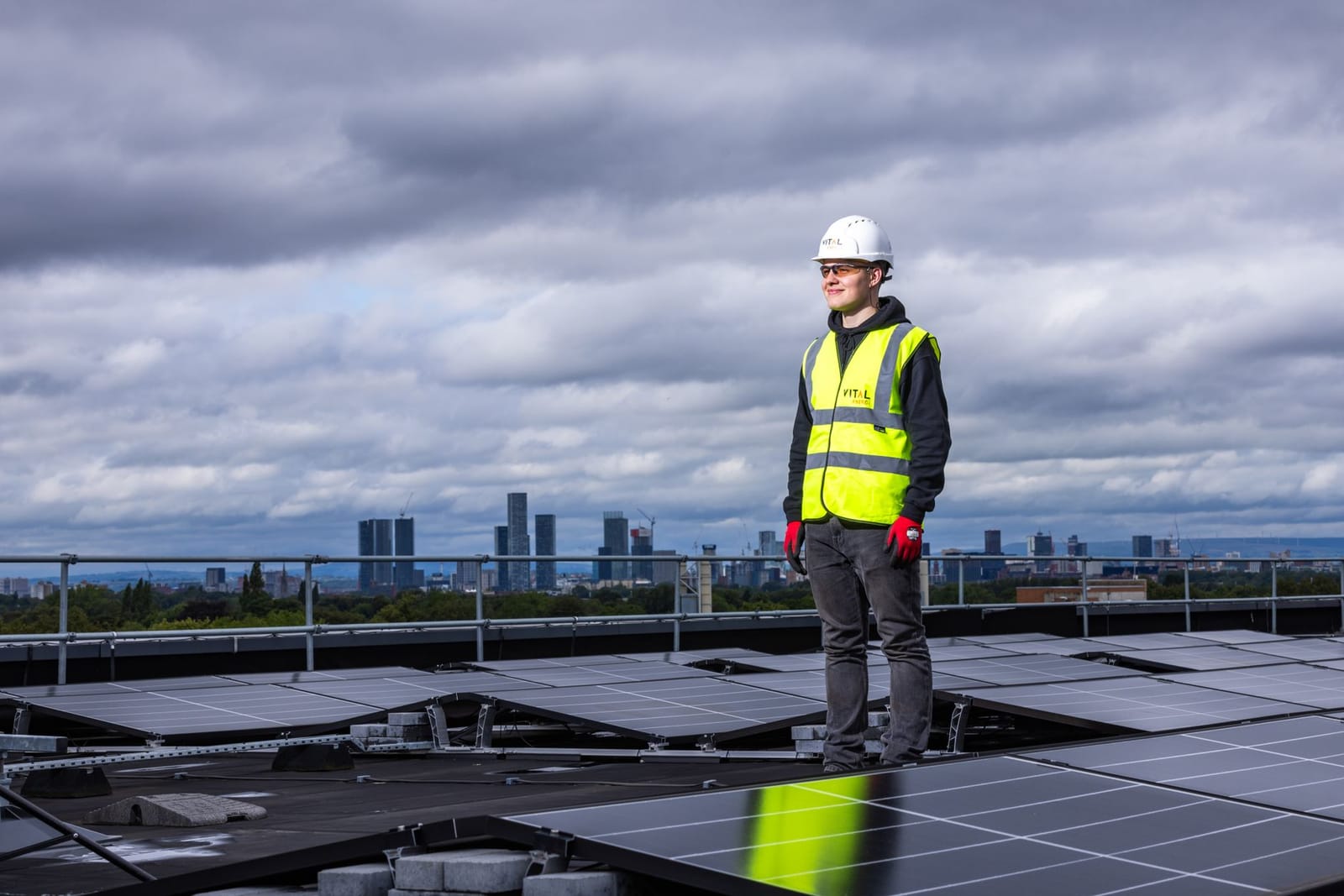
For a manufacturer the funding question is rarely whether solar works. A factory or engineering shop typically runs a heavy, steady daytime electricity load, which is the single most important factor in solar economics, because power used on site displaces grid import at roughly 26 to 32p a unit rather than being exported for a fraction of that. The harder question is how to pay for a 100 to 500 kW system, a project usually valued between £85,000 and £425,000, without tying up the working capital your production line depends on for tooling, stock and wages.
Why the routes land differently for a factory
Manufacturers tend to sit at the higher end of on-site self-consumption, often 60 to 80% for a well-matched single or double-shift pattern, which shortens payback and makes ownership routes especially attractive. A well-sized industrial system commonly shows a simple payback of around four to seven years before tax relief, tightening to roughly three-and-a-half to five once first-year allowances cut the net cost.
Because so much of the benefit comes from using your own power, the decision usually comes down to whether you want to own the asset and keep every pound of that saving, or preserve capital and accept a lower lifetime return. The main routes:
- Buy outright keeps the maximum lifetime return and the full first-year tax relief, but ties up cash a manufacturer often needs for machinery.
- Hire purchase is the popular middle path: a deposit then fixed monthly instalments, you own the system at the end, and you still claim the year-one allowance on the full cost now.
- Asset finance secures the borrowing against the solar plant itself, so your overdraft and equipment-finance lines stay free for the production side of the business.
- A business or green loan funds an outright purchase so you own the system from day one while repaying separately; some lenders price energy-efficiency projects keener.
- A Power Purchase Agreement installs the system at zero capital cost, but the funder keeps ownership, the tax relief and the export income, so it delivers the lowest lifetime return.
The clean way to choose is to model each option against your own bill. The finance calculator shows the monthly finance or PPA cost next to the projected monthly saving, so you can see whether the project is cash-flow positive in year one for your specific load and unit price. Line the routes up in the finance options comparison to see ownership, balance-sheet treatment and who claims the relief side by side.
The grants and reliefs that actually apply to manufacturing
Most business-solar “funding” is tax relief, not a grant cheque, and for manufacturers that relief is substantial.
- Annual Investment Allowance gives 100% first-year relief on qualifying plant up to £1m a year, and since most factory installs cost well under that cap, the whole system can usually be relieved in year one. At 25% corporation tax, £100,000 of relief returns about £25,000 in the first year.
- The 50% special-rate first-year allowance matters for companies whose total qualifying spend in the year exceeds the £1m AIA ceiling, which larger industrial projects can. Note the honest correction here: solar PV is special-rate plant, so it does not get 100% “full expensing”, and the new 40% first-year allowance from January 2026 is for main-rate assets only, not solar.
- Business rates exemption means qualifying rooftop solar for self-consumption is 100% exempt from business rates in England from April 2022 to March 2035, so your array will not raise your rateable value in that window (Scotland and Wales run separate regimes).
- VAT on a commercial install is standard-rated at 20%, but a VAT-registered manufacturer reclaims that as input tax, making it a cash-flow timing item rather than a real cost.
- The Smart Export Guarantee pays you per unit for surplus power exported to the grid, on systems up to 5 MW. For a manufacturer with high self-consumption, export is the smaller top-up, not the main event, and the income is taxable trading income.
The one genuine national grant that was open to private industry, the Industrial Energy Transformation Fund, targeted energy-intensive industry and was a real exception among UK solar schemes. Be aware it closed to new applications in 2025, with no successor competition planned, so any adviser quoting it as a live 2026 opportunity is out of date. If you are an energy-intensive site, it is still worth monitoring for a future replacement, but do not plan a project around it today.
To see which schemes genuinely fit your business rather than the public-sector or domestic ones that do not, run the funding finder, which maps the eligibility questions for you.
What this means for a manufacturer’s decision
If your factory has strong daytime demand and the cash reserves to spare, buying outright or via a green loan will return the most over the twenty-five-year-plus life of the array. If you would rather keep capital in the business, hire purchase or asset finance let you own the system and claim the capital allowances while paying from the energy it saves, often cash-flow positive from the early years. Many manufacturers fund solar alongside storage and electrified plant, which renewable energy finance covers route by route. A PPA remains the fallback where no capital can be committed at all, accepting a lower lifetime return for zero upfront cost and no maintenance risk.
Whichever way you lean, model it first and confirm the tax position with your accountant, then request costed quotes once the numbers stack up for your site.
Grants & reliefs that apply to manufacturing & industrial
Not sure which fits? Check what your business qualifies for, model the numbers, then get costed quotes.